

|
Monthly archives: August 2003
Maroth to the Flame
2003-08-31 01:55
The Togers lost their 100th game of the year tonight, 5-2 against teh White Sox at home. The game also marked the nineteenth loss of the seaon for starting pitcher Mike Maroth (6-19). Detroit has 28 games left, which means that Maroth could have five more starts. Maroth has not won, or even failed to lose, more than two games in a row this season. Meanwhile, the Tigers are on a pace to better than 1962 Met's by one game with a 41-121 record. The Mets were 40-120. Of course, they were a first-year expansion team, not an extablished team with 103 seasons to their credit. But who's counting. Also, the Tigers do play 18 of 28 against playoff calliber teams though only 12 of 28 are on the road.
Permalink |
No comments.
Vile Card
2003-08-29 13:25
In the American League, the A's are continuing their tradition as baseball's answer to a Wagnerian opera, passing the Seattle Mariners as if they were standing still even while Oakland lost arguably their best pitcher this year in Mark Mulder. The M's, the first-place A's, and the Red Sox, all with 2 games of each other, are the main candidates for the wild card. The three Central teams are battling for the division crown with the two losers battling only for control of the TV clicker during playoff time. The NL once had similar battles just two weeks. The Braves and Giants had all but squirreled away their playoff spots, the Central was tight, three-team race, and the wild card was battle bteween two teams, the Phils and Marlins. The Phils had controlled the also-ran spot all season until Florida came on strong after the All-Star game. It looked like the wild card would boil down to the suddenly high-salaried, veteran Phils against the low-salaried, young (except for Jack McKeon) Marlins. On Sunday, August 17, the Phils had just won five straight, including a three-game sweep of the Cardinals, were heading for Milwaukee to start a 13-game road trip, and led the Marlins by one-half game. No other team was within four games of Philadelphia:
However, things have changed dramatically in the last couple of weeks. The Phillies get swept by the lowly but suddenly hot Brewers, lost two of three in St. Louis, and got pasted by Montreal for a merciless four-game sweep, in which the Expos outscored the Phils 39-17 (or an average game score of 10-4). On August 26, the Phils bullpen relinquished 10 runs in two innings to cough up a 10-4 lead (a game the Phils lead 8-0 in the middle of the fifth inning). So, the Marlins are now in complete control, right? Uh, no. They have only made up one-half game to tie the Phils. While the Quakers ran off a 1-9 road streak, the Retirees went 1-8. The wild card lead is now shared among five clubs (well, technically Montreal trails by fractions of winning percentage points) and three other clubs are within a game and a half of the lead:
If course, one of the Central teams will have to win the division crown so the wild card is really just a seven-team "race". However, that's still more than half the non-division leaders in the NL. The AL is the best argument for the wild card possible: there are a couple of very strong teams that may not win their division but could be just as strong as any other team come playoff time. The NL is the nightmare that all of us wild card detractors have feared all along: a collection of mediocre teams, one of whom is now guaranteed a playoff berth alongside truly dominant teams like the Giants and Braves. Not only that but the NL is assured of two these teams-the wild card and the NL Central winner-of oozing into the postseason. Oh, joy! Short of Larry Bowa going postal, I'm not sure how much excitement this snoozefest will engender. Consider that nary any of this teams is actually playing well. Despite the Phils/Marlins kamikaze travails of the last two weeks, they both share a piece of the wild card lead. Take a look at the records of the wild card teams since last Sunday:
A .421 winning percentage on average? That's worse that every team in the NL but the Padres for the year. Meanwhile the Brewers won 10 straight. So leaving aside the ethical dilemma of whether any of, let alone two, of these teams should make the playoffs-they are on a pace to be the worst NL playoff team in a non-strike year since the '73 Mets-, who will go? Here are their records since the All-Star game, including won-lost record, expected won-lost, ERA, and OPS (On-base Plus Slugging):
The Phillies finally became the team that everyone expected in 2003, with a powerful offensive and a problematic pitching staff. Houston and Florida should have the best records in the second half. However, the Cubs and the Marlins (despite the 1-8 run) actually have the best records. What do I think will happen? I expect the Astros to take control of the Central. They have the best team but continue to underwhelm. The Phils could turn around the current trend and wrest control of the wild card. However, they are just as likely to plummet and take manager Larry Bowa down with them. All of which would not bode well for next season when they move into a new stadium. Though the Phils' brass should last offseason that it is willing to finally open the coffers and get big-name free agents. If they fail to win the wild card, expect Bowa to be fired and the Phils to be very active in the offseason to create some positive PR for next season. The two Western clubs have been treading water in a sea of mediocrity. I see no reason, and they seem to offer none, why they would take the wild card berth. Their lack of offensive production is a concern. By the same token, the Cardinals lack of pitching is a real concern. That leaves the Cubs, Expos, and Marlins. Those three have been pretty even since the break-Florida was hotter at the outset and Montreal is hotter now. If I had my druthers, I would love to see the Expos make the playoffs. Something tells me that the Cubs while scrapping for the Central title will take the wild card. They just have that after-school-special feel about them. Even though the two teams that eke out a playoff berth from this pool will be David-like underdogs. Chances are and history tells us that one or both will advance to at least the NLCS. At least they'll have a better record than the champion Angels, who are sinking into the sunset like their ex-owner at the end of a B movie.
Permalink |
No comments.
Imagine There're No Sac Flies-It's Easy If You Try
2003-08-27 16:30
Give unto me, made lowly wise, How many times have you seen a line drive that is snared by an outfielder as a the runner from third tags up and scores a meaningless run late in a lopsided game? The batter gets a sacrifice fly though the last thing he was trying to do was sacrifice himself to stymie a possible rally. So why award his lack of success with a sac fly without an at-bat instead of a plain, old out? Because it's how the rule reads: SACRIFICES My friend Murray and I started an email conversation on the inanity of the sac fly rule in response to an item in Joe Morgan's chat this past week, in which Joe chastises the small-ball-foregoing modern batters for not going for the ever-valuable sac fly. Quoth Murray: Don't you think sac flies are stupid? Whatever you think about it as a tactic, at least a bunt is a discrete skill. A flyout is a negative outcome that has the positive effect of sometimes advancing runners a base. On occasion, a club is lucky enough to score a runner from third because of one. But otherwise, it's just an out, and batters aren't supposed to make outs deliberately. Most of the time, the batter isn't trying to make an out when he hits a sac fly. I think it should be accounted for the same way that a ground out that advances a runner home is handled. Major League Baseball itself has equivocated many times on the sacrifice fly issue. Even though the rule is almost one hundred years old, MLB has had a love-hate relationship with the sac fly. Here are the highlights of the rule's history: 1908: The sacrifice fly rule [10.09] is introduced. The original rule is very similar to today's version: If a runner scores on a caught fly ball, the batter is credited with a run batted in and is not charged with an at-bat. Unfortunately, the sacrifice flies are not recorded as a separate statistic: they are recorded under sacrifice hits (i.e., bunts). That's a lot of shifts back and forth on the issue over the yeas. For proof of baseball's still-existent hypocrisy on the sac fly rule, keep in mind that they negatively impact one's on-base percentage whereas bunts do not. Also, a hitting streak (consecutive game or consecutive at-bat) may be ended by a sac fly (Rule 10.24: "The streak shall terminate if the player has a sacrifice fly and no hit.") but not by a base on balls, hit batsman, defensive interference or a sacrifice bunt. Sacrifice flies are the second-class citizens of the sacrifice world. To quote Yukon Cornelius, "Even among misfits, [sac flies] are misfits!" So what has the sacrifice fly done to baseball. Well, before 1954 (i.e., 1908-30 and 1939, the first attempts at the sac fly) there is no statistical record of occurrences of sacrifice flies. The at-bats were reduced but they just did not record the sac flies (they were lumped with bunts). Since 1954, the obvious result of the sacrifice fly rule is to positively affect batting averages since the flyout at-bats were converted to sacrifices that did not enter into the batting average calculation. Slugging averages, since they are derived from at-bats, were similarly affected (and in turn OPS). Sac flies also directly affect runs batted in. On-base percentage, as we already discussed, includes sac flies. No other offensive stat was affected. The runs still score. The pitcher's and fielder's stats stay the same, an out was recorded and a run (ostensibly earned) was scored. Well, how much are the affected stats...um, well, affected anyway? Here's a table from 1954 with the batting average, slugging average, and OPS (On-base Plus Slugging) per league. Then the adjusted averages had sac flies counted as at-bats appear next (with the "+" designation). Finally, the yearly differences between the actual and adjusted averages appear (except OPS which is increased the same as the slugging) along with sacrifice fly occurrence (SF/PA) and the percentage of sacrifice flies to runs batted in (RBI%):
How about individuals? Are some affected more than others? OK, for starters here are the all-time leaders in sac flies, first the seasonal leaders and then the career leaders:
Now let's look at the men who have had the highest percentage of career runs batted in attributable to sacrifice flies (min. 100 RBI):
Now here are the lowest percentage of RBI attributable to sac flies:
As far as batting titles being affected by the sac fly rule, I can find one since 1954 that would change hands if the sac flies were counted as outs and therefore, at-bats. That was the 1970 AL batting title in which Alex Johnson edged Carl Yastrzemski after both officially ended at .329. Johnson's .32899 gave him the nod over Yaz's .32862. However, Johnson's three sacrifice flies compare to Yaz's two would have given the title to Yaz, .32746 to Johnson's .32739. So what kind if stat are we talking about here? It only affects batting and slugging averages minimally (historically. two and three points respectively). It only occurs less than one percent of all plate appearances (0.74%). The main beneficiary of the sac fly are weak-hitting middle infielders/center fielders and pitchers. The only real affect is on runs batted in, comprising 6.89% of them historically. So I propose that sacrifice fly rule be eliminated. If a player flies out and a run scores as a direct result, by all means credit the player with an RBI, just as he would be assessed if a ground out had plated the runner. However, charge that player with an at-bat. Baseball made a mistake fifty years ago rewarding players for possible unintentional results and it is about time that we reversed that mistake. I see three arguments against the elimination of the sacrifice fly rule: 1) History-Baseball is a very slow-turning ocean liner obeying Newton's First Law of Motion religiously staying in its current motion. It has now accumulated fifty years of sac fly history and that momentum outweighs any possible reason to change things. Let me answer them one by one. History: If the history of the sac fly rule teaches anything, it's that the rule has been modified often and it has yet to cause the downfall of Western society. Why keep something around just because of inertia? Statistical inaccuracies: First, the statistical record for the year's prior to 1954 in which the sac fly rule held sway are completely hosed. It appears that all sacrifice flies were recorded under bunts. Sacrifice bunts occurred about 3% of all plate appearances during the Teens and Twenties and had an all-time high of 3.72% in the 1917 AL season. With the original introduction of the sac fly rule, sacrifice hits increased about 25% in each league. They shot up 18% in the AL and 39% in the NL when the sac fly rule was expanded in 1926 to include all flyouts after which runners advanced. With the 1930 elimination of the sac fly rule, sacrifice hit rates dropped by 50% in the AL and 38% in the NL. The one-year revitalization of the rule caused sacrifice hits to shot up by over 50% (54% in the AL and 68% in the NL). 1940 witnessed a similar decrease of 42% in sacrifices per plate appearances in each league as the rule was again abolished. The statistical history, at this point, for all sacrifices is completely beclouded. Second, the years in which the sacrifice fly rule did not exist cause enough inaccuracies on their own to thoroughly muddy the water. Eliminating the rule now would be consistent at least with a greater amount of baseball's history. Small Ball: My first answer to this comment is a question. Did small ball originate in the Fifties, because that's as far back as the current sac fly rule goes? If not, then were batters in the Thirties and Forties dissuaded from hitting sac flies to help the team? Besides, if we want to reward a player for sacrificing himself to the strategies of small ball, the sac fly stat is a poor compensation. Why not record the sacrifice fly as an out and an at-bat, but record it along with a number of other sacrifices under a new stat, which I would call "Out with Consequence" (call it Indifferent Sacrifice, I don't care). I propose that an Out with Consequence would include the following and would record an RBI if a run scores (same as today): - Sacrifice Flies - Flyouts that advance a runner - Groundouts that score a run - Groundouts that advance a runner - Strikeouts on a busted hit and run There are probably others that I couldn't think of. However, I would keep sacrifice bunts out of the mix. The reason being that bunts are obvious and intentional but the sacrifices that I list above are not. You know that someone is bunting if he squares to bunt. If someone hits a fly ball to left with a runner at third, is there any real way to be certain that it was what he intended to do? No, there isn't. Also, he may be trying to lift a ball out of the infield to score a runner and popup to short or strikeout. With a sac fly, it's the results not the intention. Baseball itself segregates sacrifice flies from bunts by including the only former in on-base percentage. I would propose that bunts still be recorded separately and suggest that failed bunts (either by strikeout or a force out of the lead runner) be tracked as well. How many times are we told that a bunt is the correct strategy? Well, if you know that a player only bunts successfully 10% of the time, wouldn't that change your mind? Wouldn't it be nice to gauge the success of bunts empirically? Does their success rate merit their use in the middle innings of a close game? If the opposition fields the bunt well (i.e., their opponents have a low success rate), shouldn't we consider a different strategy? Well, we can't answer those questions now because we just record successful bunts. Unsuccessful bunts are just plain outs. I think that the Out with Consequence would best capture what baseball was originally trying to record and as Wilfred Brimley said, it's a tasty way to do it. It would not arbitrarily choose the sac fly strategy and ignore a boatload of others. And most importantly it wouldn't reward a player with a free plate appearance for an unintentional consequence. I propose adopting it and retroactively subsuming sac flies under its heading. Also, the sac flies from 1954 to today should become at-bats. The previous sac fly eras (1908-30 and 1939) would still be slightly off but unless retrosheet can differentiate between bunts and sac flies, I'm willing to live with it. The end result would be that the small-ballists would then have a real stat from which to pontificate. "Jones may only get on-base 30% of the time, but he leads the league in Outs with Consequence. He is a real team player." And we of the sabermetric bend would have a means to refute their argument ("But Smith gets on base 37% of the time with about the same number of Outs with Consequence. And he is successful in 90% of his bunt attempts. Isn't that more valuable?") It's not the final answer in the "small ball" debate, but it at least allows us to conduct a more substantive discussion of the matter.
Permalink |
No comments.
The Angry Beavers
2003-08-27 08:44
All but one of the Triple-A Portland Beavers had been suspended after they chased a Las Vegas fan, who heckled and then threw a stress-relief ball, that night's giveaway, at pitcher Tagg "You're It" Bozied. I guess the fan didn't understand the point of the giveaway. Like the Dodgers-Cubs scrum a few years ago that began because a fan stole catcher Chad Kreuter's hat in the bullpen, the suspensions must be staggered. The Beavers had only 9 available position players on Tuesday.
Permalink |
No comments.
Ron-dealt
2003-08-27 00:35
Well, I guess the Padre outfield was a bit overcrowded. After acquiring Brian Giles, the Pod People traded his predecessor, Rondell White, to the transaction-happy Royals for pitching prospects. What do the Royals need with pitching prospects anyway when their staff is getting progressively older over the course of the season. Their original rotation was Runelvis Hernandez (25), Jeremy Affeldt (24), Miguel Asencio (22), Chris George (23), and Darrell May (31). It is now: May (the only original one remaining), Jose Lima (30), Kevin Appier (35 and just went on the DL), Paul Abbott (35), Brian Anderson (31), and Jimmy Gobble (22). Their starters' ERA is just a hair under 5.00 for the season. I said in the offseason that the lack of experience and talent in the rotation would hurt them, but I had no idea that it might cost them a division crown.
Permalink |
No comments.
Life of Brian
2003-08-26 15:51
Welease Bwian! Brian Giles has goes from the frying pan and into the fire as the Pirates ship him to San Diego for what ESPN says is "pitcher Oliver Perez, a minor-leaguer and a player to be named later." Perez had been untradeable but the Padres may have considered now that he is 4-7 with a 5.38 ERA. San Diego outfield suddenly gets very crowded with Mark Jotsay and Sarge Matthews Jr. in center, Phil Nevin in right, and Rondell White in left. They also have Xavier Nady in the minor (how may be the player to be named in the Giles deal). White is a free agent and still may be traded before the waiver deadline.
Permalink |
No comments.
Fit To Be Tied
2003-08-26 14:58
Here's the tie breaker rule thanks to the Cub Reporter. It does not as a matter of fact include a coin toss for three teams:
If necessary, the subparagraph (d.) procedure of adding the immediately preceding game played by each team records shall be continued until such time as one team emerges with a better record and that team shall thereupon be declared the Division Champion and the other team shall be declared the Wild Card team.
teams being designated the A, B, C and D teams. A will play B at the home field of A, and C will play D at the home field of C, both games to be played the day after the conclusion of the championship season. The following day, the winners will play at the home field of A, or, if A lost that of B. The winner of the game shall be declared the Division Champion.
Permalink |
No comments.
Shall I Compare Thee to
2003-08-26 00:55
Shall I Compare Thee to A Summer's Joe Morgan Chat Day?Summer's lease hath all too short a date. Summer turns me upside down. Oh, summer, summer, summer. You know it's kinda like a merry-go-round, in a way. Also, a summer breeze makes me feel fine just so long as it's blowing through the jasmine of my mind. Mostly, the jasmine of my mind is telling me that summer is way too short. Or is it the jasmine of my brain-I get confused with the whole mind/brain jasmine duality. Anyway, it's almost over and with it the baseball season. This is the problem with baseball: the season builds to playoff races, then the excitement is ratcheted up a notch for the playoffs, and finally the World Series, the crown jewel (hopefully) of the season is played. And then we get four months of a whole lot of nothin'. Speaking of which, Joe Morgan's chats will end along with summer. This week's offering is a tepid rainout of an offering, but it is still Joe. We here at Mike's Baseball Rants love the Joe Morgan: he was one of the most exciting players we ever saw. And we love the Joe Morgan Chat Days ever more. Joe has experienced more on the field than most anyone this side of Minnie Minoso, but his analysis offers belies that depth of knowledge. Our quest is the nirvanic, hairs-standing-up-on the back-of-your-neck moment when Joe plumbs that cache of baseball knowledge while saying something plumb obtuse. And babe, don't you know it's a pity that the chats can't be like the Sunday nights, In the summer, with Joe Morgan. In the summer, with Joe Morgan. The GoodMoe (Lake Crescent, WA): What kind of team do you believe is more likely to win a World Series? A balanced team (Seattle), a pitching-dominant team (Oakland), or an offensive-juggernaut (Boston)?
Utek (LA): Hi Joe. Taking nothing away from Barry Bonds (who has been the most locked-in hitter over the past 3 years that I have ever seen), whenever Barry gets those rare opportunities to hit late in the game, it is always against the team's "situational lefty", ie soft-tossing breaking ball pitcher. Since Bonds has shown that he can hit left-handers, and can lay off curveballs out of the zone, and since you can count the number of hard-throwing lefty relievers on one hand, wouldn't it make more sense to throw your reliever with the best stuff against Bonds, rather than the one who throws left-handed?
BP (Boston, MA): Joe, how valuable can a closer be if he is only needed when you're already winning (according to you above)?
"7 or 8 years ago"? Wow, last week, Joe couldn't remember what he said the previous day and now he's spotting dimes from nearly a decade ago.] ken, atlanta, ga: What happens if there is a 3-way tie for the Central division (al or nl) at the end of the season? do they play a round robin playoff?
They would do the flip about one week before the end of the season if it looks like it might be a tie.
Brian Mongeau (Wellesley, MA): Why do you have such beef with the red Sox? I've heard you compliment other teams while announcing, but never my beloved BoSox. Are you still sore that we were able to take you to 7 games in '76, when we were supposed to be swept?
Chris Mullin- Cincinnati, OH: Earlier this week Mike Schmidt made some comments that he thought someting would happen (possibly reinstatement) with the Pete Rose situation soon after the end of this season. He made these comments after a meeting with Bud Selig that also included both yourself and Johnny Bench. Do you agree with Mike Schmidt's comments, and did you get the same impression from the meeting with the comissioner? Thanks!
Mark South Orange, NJ: Joe, while everyone is talking about Pete Rose and the Hall of Fame, I think a bigger travesty is Marvin Miller's rejection by the aloof former players on the Veteran's Committee. Could you explain why Miller wasn't given overwhelming player support for induction? How could so many players ignore Miller's contribution to their huge fortunes and to the game itself? Do the players on the committee even realize he won't be eligle again until he is 90? It puzzles me that there isn't more outrage for this injustice.
The BadMike (St. Louis) : Joe I don't understand the argument that Albert PUjols is less valuablr because he doesnt have a "position". Isnt the ability to play all over the place (LF, 3B, 1B) a luxury to have especially in a superstar player. ANd isnt it worth more if that player is at least average on defense at all his positions(LF, 3B), if not stellar.(1B) I am just curios where the problem is with him not playing left field or first base every day is. No one knocks utility guys for being able to play all over the place, as a matter of fact, most baseball people say the versatitlty is what wins those guys jobs. So why is it different for a superstar player, especially in the NL with all the double switches etc. Thanks.
Bill -- Royal Oak, MI: Joe- I enjoy your analysis and insight but have an issue with your 'splitting' both AL and NL MVP honors on ESPN.com today. This isn't something silly like the Presidential election - this is the MVP. We need a clear winner. I want answers. 1 winner, each league, who do you pick. Thanks.
Cal Buzz (Anchorage, AK): Mr. Morgan, after reading your article on the AL MVP, I have to argue that by your own standards, Bret Boone is clearly the MVP this year. Boone has bettered Giambi's numbers playing Gold Glove 2b! He shouldn't be penalized for playing on the same team as Ichiro. It looks like '96 all over again, where Arod lost the MVP because a Seattle sportswriter thought Griffey was the better player. Even if that was true, Arod's play that year was more valuable. Not only that, Boone is the leader in the clubhouse, way more than Arod or Griffey ever were. Boone is putting up Arod caliber offense and defense on a division leading team! Thanks for your time.
The criteria to which Cal refers are from here, from Joe's AL MVP article: "I view the MVP differently than most fans. I look at a player's contributions in the clubhouse and on the field, offensively and defensively ... the total package. Statistics and numbers tell you something, but intangibles are important too. Offensively, the most important element is run production -- the runs a player drives in and scores. Run production is more important than batting average or home runs. If everything is based on runs scored and runs batted in, here are the top 10 in the AL in that combined stat (I won't even critique the stat as a means to evaluate players):
His next criterion is "how the team of an MVP candidate fares". Delgado, Wells, and A-Rod are on teams that are out of the playoff hunt. That leaves Ramirez and Boone tied for fourth in combined runs. Factoring in defense-Joe's "complete package"-you end up with Boone. So Cal is right there. However, I don't think one can say that "Boone has bettered Giambi's numbers playing Gold Glove 2b!" Boone trails Giambi by 63 points in OPS, which comes from their on-base percentages (Boone has 49 walks to Giambi's 111). As far as Boone winning a Gold Glove, I think division-rival Mark Ellis will have some say there. He has played about the same number of innings at second base (actually about 50 fewer) but has accepted 83 more total chances. Boone did win the Gold Glove in 2002 (and does have fewer errors 3 to 11 than Ellis). By the way, here are all of the qualifying second basemen ranked by Zone Factor. Boone doesn't look like a strong candidate:
But, I guess, to quote Nigel Tufnel, "That's nitpicking. Isn't it?" Really, if you want a candidate from the middle infield, one who has been putting up superior numbers, then the ideal choice is A-Rod. But Joe won't go for that-no can do-because the Rangers are in the cellar. But with Boone's M's being again passed by the A's, if they don't qualify for the postseason, isn't Boone in the same boat as A-Rod? His team will just suffer a little longer before elimination. I guess that's my problem with these criteria, they are so arbitrary. A player plays well down the stretch but his team doesn't make the playoffs. Does he still get credit for his performance in MVP voting? Just get rid of the award and go with player of the year. It'll be less controversial. Oh, and as to who is doing better "lately", Ichiro or Boone. Boone is only batting .243 since the All-Star break, but leads Ichiro in OPS by 40 points. In August both have posted OPSs of .717 so far. If I had to pick an M's player by recent performance, I'd go with Edgar Martinez who has a .904 OPS since the break and .934 in August. Though, truth be told, the offense (along with their starting pitching) is a major reason why they are just 18-20 since the All-Star break. By the way, non-candidate Alex Rodriguez has a 1.208 OPS since the break, nearly 200 points more than the next AL batter.] Shane (Dayton, OH): Hi Joe. I ask this question every week and never get it answered. What do you think the possibility is of the MLB getting both a salary cap and a salary floor. I hate the fact that at the beginning of each year, you can already eliminate one-third of the teams from the pennant races. I think MLB should model around the NFL. What do you think?
Again nitpicking, as far as salary caps, they have one now. It's a soft cap called luxury tax, and all but the Yankees fear its name. As far as a salary floor, it was proposed during the last CBA, but too many low-salaried teams wanted to pocket their luxury tax money (including Bud's old/current team, the Brewers). It may get discussed in the next CBA. However, given that the owners declared victory after the "small-market" (huh?) Angels won the World Series, so don't hold your breath.] LAURENE BOLET, SAN FRANCISCO, CA: Why don't they create a team statistic for the Intentional Walk instead of sticking it to the poor pitcher's stats who didn't have any choice in the matter? It makes it look like his control is worse than it is.
If you don't want to charge an IBB to a pitcher, don't give him the benefit of the double play either. What about unintentional intentional walks? Look, if you don't like using intentional walks in your analyses, just subtract them out before calculating.Too much trouble, that's why Joe basis all pitching analysis all the all-consuming Win.] Brad NYC: Joe, Love you commentary and look forward to each and every chat. In your AL MVP article, you stated that Manny is the Sox most important player, but Nomar is the most valuable. Could you please clafify a bit. In my mind, Nomar is more valuable because he has the offensive production, runs the bases well, and plays a premium defensive position well.
Michael- Boston: How can you say Nomar wouldn't be as good? Did he not win two straight batting titles without Manny?
Nomar's best years were 1999-2000. They were the only times that he had an OPS in the top five in the league, or had an adjusted OPS in the top ten. This year his OPS ranks 12th in the AL and fourth on the Saux.] The UglyNomah, Bahwstuhn: How can "knows how to win" be quantified in a measureable statistic which shows how it is used and affects the game?
"[H]e will hit fly balls when he needs to...There are guys that have a runner at third with one out and is still trying to hit a HR." What Joe is advocating is hitting a sac fly to score the runner. However, wouldn't be infinitely better for the batter to hit a home run in that situation? Maybe he shouldn't be aiming for the fences, but a homer scores two and saves an out. Joe is correct that a strikeout when a player's trying to clobber the snot out of the ball is infinitely worse than a sac fly in that situation. But aren't there a number of other issues involved? Is the team leading or behind? Is it late or early in the game? Is the pitcher laboring? Who is up next? Are you home or away? Who invented liquid soap and why? Of course there are a myriad of factors. There are things that players do that don't show up in the box score (like moving a runner into scoring position in a late/close game). The stats we have are not perfect. But that is why we try to delve beyond batting average, home runs, and RBI. Thanks for validating sabermetrics, Joe!] Lance Oliver (KC): Why is the spitball, and scuffing baseballs illegal. I think it adds more flavor to the game.
Seriously, the pitches were made illegal because the powers that be though that they gave the pitcher an unfair advantage. It's the same as the balk rule or allowing walks after four balls. The pitcher controls so much of the game, and the development of the sport can be viewed as an incremental dissolution of the pitcher's power. By the way, the old saw that Carl Mays fatally hitting Ray Chapman causing the spitter to be outlawed just aint true. The Spitter had been repealed prior to the 1920 season. Chapman's death did change the number and the quality of the balls used in games. In The Glory of Their Times,Fred Snodgrass says, "We hardly ever saw a new baseball, a clean one. If the ball went into the stands and the ushers couldn't get it back from the spectators, only then would the umpire throw out a new one." That changed and helped bring about the offensive explosion of the Twenties.] Jackie Haswell, Tifton, Ga: What do you think about the chicken making his return in San Deigo. What is one of your most memorble laughs at a team mascot?
Really, the Chicken boxed an ump? And the ump knocked him out?!? (Ha. Ha.) That's great. Only the Chicken could come up with that. That reminds me of that episode of Gilligan's island when they almost got off the island but Gilligan screwed it up. Or that episode of Bewitched when Sam used her powers and Darin got angry. Or that episode of Three's Company that was full of double entendres. Oh, good times! That was awesome!]
Permalink |
No comments.
A Round and a Bouton
2003-08-25 11:08
Alex Belth has an interview with the always intersting Jim Bouton. My favorite: BB: Why are the old guys so threatened by the modern players? Is it because on some level they feel that they won't be remembered? Bouton's just an interesting, intelligent guy.
Permalink |
No comments.
Pujol-stered
2003-08-23 00:38
Albert Pujols just, lost his bid to extend his 30-game hit streak, going 0-for-5 in an odd Cards' loss to the Phils, 9-4. The game went from a 4-3 realtively low-scoring game through seven with the Cardinals continually edging out the Phils to a wild blowout in the Phils' favor. In the end Jim Thome and Pat Burrell both homered twice and the Phillies scored 7 runs in three innings off the Cards' atrocious bullpen. The game also featured a bench clearing after alleged reliever Esteban "Toward Triple-A" Yan threw inside to Marlon Byrd twice in a row. Somehow Yan stayed in the game even though a warning had been previous declared. The Cards acquired Sterling Hitchcock earlier in the day from the elated Yankees and he will start Saturday. They also liberated Mike DeJean from Milwaukee. DeJean should help but the Cardinals apparently have no credible bullpen aside from Jason Isringhausen. Yan was especially poor. At one point in the ninth it became apparent that the Cardinals had no one else in the pen to waste on the game, meaning that Yan would just have to take one for the team. Yet it seemed that he could not get a man out. Yan faced 9 men. here are the results of the first 7: HR, strikeout (to end the eighth), single, walk (including clearing the benches, one actual wild pitch, and one should-have-been wild pitch on the second inside pitch to Byrd), passed ball, single, single, walk. In total, one out, four hits, two walks, three runs, and an inherited runner who scored. Then the Cards got three outs on two quick bang-bang plays to the shortstop. The Phils maintain their one-game wild card lead over the Marlins, who are losing at San Francisco, with the ever-fading Dontrelle Willis getting knocked around (he had a 7.31 ERA in Auguts going into the game and allowed four runs in five innings). There are seven clubs within 4.5 games of Philadelphia.
Permalink |
No comments.
The Day of Whines and Rose
2003-08-22 09:57
BEFORE THE LAW stands a doorkeeper. To this doorkeeper there comes a man from the country and prays for admittance to the Law. But the doorkeeper says that he cannot grant admittance at the moment. The man thinks it over and then asks if he will be allowed in later. "It is possible," says the doorkeeper, "but not at the moment." Since the gate stands open, as usual, and the doorkeeper steps to one side, the man stoops to peer through the gateway into the interior. Observing that, the doorkeeper laughs and says: "If you are so drawn to it, 'just try to go in despite my veto. But take note: I am powerful. And I am only the least of the doorkeepers. From hall to hall there is one doorkeeper after another, each more powerful than the last. The third doorkeeper is already so terrible that even I cannot bear to look at him." These are difficulties the man from the country has not expected; the Law, he thinks, should surely be accessible at all times and to everyone, but as he now takes a closer look at the doorkeeper in his fur coat, with his big sharp nose and long, thin, black Tartar beard, he decides that it is better to wait until he gets permission to enter. The doorkeeper gives him a stool and lets him sit down at one side of the door. There he sits for days and years. He makes many attempts to be admitted, and wearies the doorkeeper by his importunity. The doorkeeper frequently has little interviews with him, asking him questions about his home and many other things, but the questions are put indifferently, as great lords put them, and always finish with the statement that he cannot be let in yet. The man, who has furnished himself with many things for his journey, sacrifices all he has, however valuable, to bribe the doorkeeper. The doorkeeper accepts everything, but always with the remark: "I am only taking it to keep you from thinking you have omitted anything." During these many years the man fixes his attention almost continuously on the doorkeeper. He forgets the other doorkeepers, and this first one seems to him the sole obstacle preventing access to the Law. He curses his bad luck, in his early years boldly and loudly; later, as he grows old, he only grumbles to himself. He becomes childish, and since in his yearlong contemplation of the doorkeeper he has come to know even the fleas in his fur collar, he begs the flea ' s as well to help him and to change the doorkeeper's mind. At length his eyesight begins to fail, and he does not know whether the world is really darker or whether his eyes are only deceiving him. Yet in his darkness he is now aware of a radiance that streams inextinguishably from the gateway of the Law. Now he has not very long to live. Before he dies, all his experiences in these long years gather themselves in his head to one point, a question he has not yet asked the doorkeeper. He waves him nearer, since he can no longer raise his stiffening body. The doorkeeper has to bend low toward him, for the difference in height between them has altered much to the man's disadvantage. "What do you want to know now?" asks the doorkeeper; "you are insatiable." "Everyone strives to reach the Law," says the man, "so how does it happen that for all these many years no one but myself has ever begged for admittance?" The doorkeeper recognizes that the man has reached his end, and, to let his failing senses catch the words, roars in his ear: "No one else could ever be admitted here, since this gate was made only for you. I am now going to shut it."
I may have been the only person this side of Doug Llewelyn to take ESPN's "Pete Rose on Trial" a couple of weeks ago seriously (well, and that sketch artist). It may be because I conducted my own trial of hustling Mr. Charles Hustle peopled by fictional characters. I do have to say that my "trial" delved further into the facts then ESPN's version. The again, I employed more credible attorneys- Jimmy Stewart from Anatomy of a Murder, Perry Mason, Joe Pesci in My Cousin Vinny, etc.-than Johnny Cochran and Alan Dershowitz. (Actually, Cochran was on my defense team as well and said of the betting slips, "If the note isn't great, you must exculpate".) And judge was Ray Walston, who at least had a baseball connection via Damn Yankees, as opposed to ESPN's choice of Catherine Crier, who as a judge, the best thing I can say about her is that, to quote Rodney Dangerfield, she "must have been something before electricity." Anyway, below are my notes from the trial of the All-Century for what it's worth: Opening Remarks
Dershowitz (prosecution): Regarding Rule 21 d, he claims that "anyone who violates the rule will be declared permanently ineligible." This is just not true. If you bet on your own team, part of 21d, only then may you be declared permanently ineligible. Here's the rule in question: (d) BETTING ON BALL GAMES. Any player, umpire, or club official or employee, who shall bet any sum whatsoever upon any baseball game in connection with which the bettor has no duty to perform shall be declared ineligible for one year. - Regarding the Dowd Report: "The only question you will have is whether his extraordinary talents as a ballplayer, his extraordinary records, requires [sic] that baseball bend, break, this sacrosanct rule. I will argue to you that baseball should not break that rule. Certainly not unless and until Pete Rose acknowledges his mistake and admits that he bet on baseball and asks for the apology that he has not asked for until now." I have no idea what that "asks for the apology..." is about. Apology from whom? Long-dead Bart Giamatti for reneging on his deal? Fay Vincent for perpetuating this mess? Bud Selig for ignoring this issue and yet lifting Rose's ban so that MLB can cash in on his name for the All-Century merchandizing? [Or Dershowitz himself for appallingly attacking the sacrosanct Bill James on the stand?] What is this need for an apology about? If you believe that Rose bet on the Reds, the apology should not change your mind about his banning. If you don't believe that the evidence proves that he bet on the Reds, then an apology is superfluous. Actually an apology in that case would be the best piece of evidence that he should be banned. I guess if I were Rose, whatever he did or did not do, I would apologize for gambling on the game, an offense that carries a one-year ban, which he has more than served. However, I would never admit or apologize for betting on the Reds, because that would demand his permanent suspension. No one, including the lawyers here, seem to get that distinction. - Deshowitz evokes Shoeless Joe Jackson saying, "nobody doubts he is qualified for the Hall of Fame". Well, I do. For one thing, he only played nine full seasons and parts of four others since he was drummed out at the age of 30. His stats are extremely impressive-.356 batting average and an OPS 70% better than the park-adjusted league average-but in a deadball era he only collected 1772 hits. Had Jackson been hit by a bus after the 1920 season instead of being banned for life, would he be in the Hall of Fame? Probably, but he would not be the lock that everyone assumes him to be. There are non-Hall of Famers form Jackson's era who have not become a cause celebre because of their throwing a World Series but may be better candidates, e.g. George van Haltren. Still Jackson's 170 adjusted OPS is ranked seventh (tied) all-time. However, I ask you to consider Dave Orr. Orr is slightly behind Jackson in career adjusted OPS (161, 14th all-time). He played until the age of 30 in the 1890 season and had a .342 career batting average. He is technically not eligible for the Hall because he only played eight total seasons, but his 7 full seasons are not far behind Jackson's nine in quality. Orr's career wasn't ended by a bus but rather a paralyzing stroke. So why don't you hear a great outcry about the injustice of Orr not being in the Hall and of the unfair rule that bars his admittance? Because his career was too short and he has been largely forgotten. Frankly, had Jackson not played for the "Black Sox" but had a career that ended at 30, so too would he be largely forgotten, an asterisk in the statistical record. The one reason why he can never go in the Hall is the reason so many have been calling for his inclusion in Cooperstown.
Cochran (defense): "Baseball has not done the right thing. This case is really about baseball justice." This point does resonant with a good number of fans. They accept that Rose bet on his team, but the Power That Be in baseball, i.e., the commissioner, screwed him, so he should get off. It's the Joe Jackson-ites' weltanschauung re. Jackson and White Sox owner Charles Comiskey. I think that baseball has screwed Rose but that it's a separate issue from his innocence or guilt in the gambling issue. Cochran than lists his records and feats via a poster-sized index card. It looked like a cue card. Rose's stats are nice but are irrelevant to his guilt or innocence in the matter. Cochran displays a Giamatti letter to a judge for bookie Ron Peters saying that Peters has been honest and forthright before the investigation was completed. Cochran says that basically this shows that the case was a frame job, and he's right. Dowd was a prosecutor putting together a prosecutor's brief. That baseball bought it lock, stock, and barrel is either naïve or duplicitous depending on your point of view. Cochran points to the Rose-Giamatti agreement that there were no findings on whether Rose bet on baseball. It's a good point that goes very far in invalidating the prosecutor's case. Witnesses (Prosecution)
Lester Munson (SI): Munson is the Basil Exposition for the Dowd Report, which he can apparently recite at will without having discovered one of the many inconsistencies listed therein. - He claims that the Dowd Report supports the stance that Rose bet on baseball and the Reds. - Re. the betting slip, he states that Rose bet on baseball, it is in Rose's handwriting, and that Rose's fingerprint was on it even though the last item was not in the Dowd Report (Dowd blurted it out in his own defense later on). First, no mention is made that Dowd never saw the original betting slip. That went to the FBI, who were investigating Rose-and eventually convicted him-for income tax evasion. Dowd only saw a copy. Rose was made to copy the writing on the slip for the handwriting expert, a practice that is highly suspect since it very often yields a false match, especially with block letters. The slip has erroneous information ("Cin At Mon" and "LA At Houst" never happened on April 9, 1987). Not to mention, the means by which this piece of evidence was acquired. Stoolie Paul Janszen admitting to taking them from Rose's home after Rose had kicked out his girlfriend, who had been living with the Rose family. Is this kosher? Shouldn't Cochran blow a hole in this? - Re. a conspiracy to frame Rose: "If it was a conspiracy, a fantastic number of people would have to be orchestrated and some of them were personal enemies, who not only did not get along, you couldn't even have them in the same room. So there is really no possibility of a conspiracy to get Pete Rose." What? It does not take a conspiracy, just two men, Ron Peters (the bookie) and Paul Janszen (the go-for). Their various girlfriends and hangers-on only know what they know refracting through their perspectives. Actually, Peters was only getting the bets through Janszen, so he doesn't know what Rose was really doing. It only takes Janszen. That's how Rose designed it to cover his tail whether against tax evasion charges or baseball suspensions or both-you make the call. Besides, Janszen had a personal grudge against Rose for kicking out his girlfriend, not backing Janszen with various gamblers which resulted in threats on his life, an unpaid debt that Janszen claimed varied between $10 K and $50 K (all sited without note in the Dowd report), severing ties after Janszen was found to be involved in drugs, and not meeting Janszen's demands for money in exchange for "protection" (actually in the Dowd report in Janszen's testimony presented as supporting evidence in Janszen's favor). - Cochran does not ask Munson about any of the erroneous or conflicting evidence in the Dowd Report nor about his biased and ridiculous statements on the stand. He just alludes to the agreement. Cochran: "It's true, is it not, that per that agreement they were not to go out and contradict what was in that agreement. Is that correct?" Munson: "I believe there is disagreement on that, Mr. Cochran. I think that on one hand people say that they could talk about whether he bet on baseball. Pete Rose insists that part of the agreement was they could not talk about that." (What? A) Cochran did not mention betting on baseball. And B) what agreement allows for people "to go out and contradict" it? Is this man insane?) Cochran: "Well, let me tell you what the agreement says. The agreement says that they would not do anything to contradict what's in the agreement. If the agreement does not make a finding on gambling, then wouldn't you find that would be a contradiction to go out and say, 'Hey, he bet on baseball'?" - Re. the injunction on MLB that led to the Rose agreement, Munson calls the Cincinnati State Court ruling, the "home-court-advantage ruling for Rose." - Re. the Hall of Fame rule change to ban ineligible players, Munson says, "Permanently ineligible means permanently ineligible. You can file all the applications you want, but permanently ineligible has a certain meaning." As a matter of fact, it doesn't. This is a blatantly ridiculous and false statement. Heinie Groh, Ferguson Jenkins, Steve Howe, Dickie Kerr, Mickey Mantle, Willie Mays, and George Steinbrenner were all declared permanently ineligible only to be reinstated later. Mays, Mantle, and Jenkins are in the Hall of Fame. - Munson: "Pete Rose's efforts to keep all of this secret show that he too knew that he were caught gambling, especially on baseball, he would never be in the Hall." Well, we already know that gambling on baseball doesn't get you barred from the Hall of Fame. Betting on his own team would be required. Second, to quote Uncle Junior Soprano, at this time "Federal marshals are so far up [Rose's] ass [he] can taste Brylcreem". Rose would later be arrested on tax evasion. One of Dowd's discoveries is a trifecta won by Rose and cashed illegally under Janszen's name. Rose was a scumbag involved in criminal activity. Of course, he didn't want any of it to come out. However, not if it had anything to do, necessarily, with his baseball career. - In summary, if this is Sports Illustrated's investigative reporter, no wonder it is such an unreadable, poorly researched rag.
Jim Palmer: - Re ex-commissioner Bowie Kuhn, quoted Kuhn as saying his job is largely "trying to maintain the integrity of baseball." Boy, talk about a conservative player. How did he do those underwear ads without blushing? Did Palmer miss the memo about Kuhn trying to destroy his union? Kuhn was the man called the "village idiot" by Charlie Finley and about whom Red Smith said, "this [the 1981] strike wouldn't have happened if Bowie Kuhn were alive today"-the punch line is that Kuhn was the commissioner at the time. - To Rose, "This is not about you and me. For you to be where you belong, you have to let us know what really happened. And be responsible for it." Well, maybe he already has. Who are you, John Dowd? Have you examined every piece of evidence about the man to be so certain of his guilt? - Cochran gets Palmer to admit that he has never even read the Dowd report. What is he doing on the stand? Oh, he's Jim Palmer and this is a TV show, that's what. - Cochran introduces a line that he repeats over the course of the show/trial: Rose's performance as a player is Hall-worthy. His performance as a manager is not. So why does an infraction as a manager have an effect on his ineligibility to enter the Hall? Well, I think the whole man goes in the Hall, not just the player part. It's not like the time on Star Trek when the split the bad Captain Kirk and the good Captain Kirk apart in the transporter and kept tested the thing with two dyed-pink poodles that had survived the same bifurcation, one comatose and one rabid. Remember the Good Kirk lost the ability to make decisions without a little bad in him. Is Cochran using Kirk's split-literally-personality as an analogue for Rose: he changed when he became a manager to include an evil side necessary for making decisions? Let's put the Good Rose in the Hall and transport the Evil Rose into deep space? Dr. Jon Grant (compulsive gambling expert): Discusses compulsive behavior of a gambler and the desire for "winning big". The sickness strikes 3-4 % of adults and calls it a sickness similar to drug or alcohol addiction. - Cochran gets him to admit that he never examined Rose. Another waste of time. Steve Garvey (is not my Padre!): Sheez, does anyone else notice how white the players for the prosecution are? - "Peter Rose had and has a problem, and that's gambling. If he looked in the camera and said, 'I made a mistake. I ask for forgiveness', he'd be in the Hall of Fame today." This guy who openly admitted to fathering children by two different women out of wedlock is going to lecture to Rose about scruples? - Garvey repeats the line that no one on the permanently ineligible list has ever gone in the Hall. I guess Mays, Mantle, and Ferguson aren't big enough names for people to remember that this just taint so. - Cochran reminds Steve and his electric ego that Rose did admit that he gambled on other sports, just not baseball. Does Garvey who still stays in contact with Rose, according to his testimony, have some piece of evidence not in the Dowd Report? Otherwise why is he up on the stand? Oh, a) because he is Steve Garvey and b) because he pushes the party line of "Apologize Pete". Another waste of time.
Dan Shaughnessy Boston Globe: Shaughnessy has to mention Buckner. Get that plug. What is he, Bobby Bittman on the Sammy Maudlin Show? How long is he going to milk this bit? - Shaughnessy says Rose would "absolutely" be admitted to the Hall if he admitted to gambling. Who is he, the Amazing Kreskin? This line is rebutted well by the Parker line later on. - He states that there have never been any Hall of Fame votes for Joe Jackson. Of course, he threw a World Series and admitted to it. It's a different infraction than Rose is even alleged to have broken. If Rose admits to it, Shaughnessy wants to put him in!?! Witnesses (Defense):
Hank Aaron: Dershowitz gets him to admit that he has no information re. the evidence against Rose and that he should admit to gambling of he did it. That's a bit of an oopsy there. Arnie Wexler (Compulsive gambling counselor): Again the "expert" admits no direct knowledge of Rose's case. What's the point? - Dershowitz tries to turn Wexler's history-that of a recovered compulsive gambler-against Rose. He asks if it is possible to turn one's life around without admitting a problem, and Wexler says he's not sure. It all seems somewhat damning until you realize that no one has said definitive that Rose is even a compulsive gambler.
Bill James:James refers to his Hall of Fame book as The Politics of Glory and ignores the later (and I believe current) title. - James mentions NFL Hall of Famers Paul Hornung and Alex Karas (yes, Webster's dad), who were banned for gambling on league games at one point. Though, of course, the penalty in baseball for betting on baseball games is declared to be one year anyway. - Then he finally puts an end to this "permanently ineligible means permanently ineligible" saying that the number of Hall of Fame members who were ineligible at some point approaches fifty. That seems a bit high. Is he including suspensions for brawls and that sort of thing? Anyway, it's a valid point. - Dershowitz hammers away at James about his statement that Danita Marcum, Paul Janszen's girlfriend, failed a lie detector test. James cites a 20/20 report. Dershowitz counters with, "Is that how you do your research?" Then he asks if James even read the Dowd report. - James is probably the only one on the defense, including the lawyers, who read the Dowd report. His debunking of the gambling slips is not even brought up. The lie detector issue is a sidebar in James' analysis. The damn thing isn't even admissible, so who cares? The man who got Claus von Bulow off-he was portrayed by Jeremy Irons: of course he was guilty-has the gall to even speak to Bill James, let alone in this manner? - I feel bad for James. He is visible shaken by Dershowitz's badgering-there is no other word for it. James stammers on occasion and his joke about an "ear witness" to describe the men who overhear alleged conversations with Rose falls flat. James is the only credible witness that Cochran has, and apparently Dershowitz wants to do his best to discredit him. Dershowitz is a scumbag, but I guess that's his job. It seems a bit too LA Law-ish to me, but I guess it plays in Peoria. I'm surprised he didn't bring up Boston's "bullpen by committee" to throw in James' face.
Bill Lee: Why doesn't this guy have a show on ESPN? He calls the case a "work of fiction" and says what Rose did wasn't a "capital offense". - Really, Lee adds no substance to the defense, but the analysts think he is the best witness foe the defense, I guess, because he didn't cave in to Dershowitz. Lee dislikes Rose and accepts the worst of his behavior but thinks he should be in the Hall. How odd is the world when most baseball fans agree with a non-conformist nicknamed Spaceman? Dave Parker: Asked by Cochran, "Are you in the Hall of Fame." Parker responded, "No, but I should be." Cochran: "Any requirements to apologize to get in the Hall." - So the defense was basically Bill James making a few points while being harangued and not much more. At least the players for the defense were more interesting. Closing ArgumentsCochran: "Enough is enough" is the general theme. - Cochran says, "The Dowd Report is ineligible." Dershowitz: Calls Cochran's defense multiple choice: "If you don't like the first choice, pick the second." He's kind of right, but what's wrong with that? Isn't that the basis of reasonable doubt? - At one point he points to the erroneous "Cin At Mon" notation on the betting slip to underscore a dramatic point. This epitomizes the trial. - Ends with, "If you bet on the game, you can't go in the Hall of Fame." Pretty fly for a white guy. The Verdict[Reprinted from my July 18th post] The jury voted 8-4 that Rose should be eligible for the Hall of Fame. They then responded 11-1 to a poll by prosecuting attorney Alan Dershowitz that they believed Rose bet on baseball. Unfortunately, he did not poll them as to whether they felt Rose bet on any Reds games in which he managed (though I suppose that was the implication). That is the offense that carries the lifetime ban. Betting on baseball itself carries a one-year ban (ask The Lip), which Rose has more than served. So why is betting on baseball even an issue? Did he bet on the Reds? That's the only question that matters. Having reviewed the Dowd report and the rules involved, I can't agree with the jury's thought process even though I agree with their "verdict". If they believed there was evidence that Rose gambled on the game and on the Reds specifically, then how can they pronounce him innocent. Well, the old cliches that he had suffered enough-as if not being in the Hall is a torture-, that other sordid characters have their plaques at Cooperstown, etc. were tramped out by the jurors as each explained his or her stance. Many added that they think he should be Hall but should not be allowed to act as manager again, which is akin to saying if found guilty in the impeachment proceedings, Bill Clinton should have remained president but been restricted from serving as dog catcher in every American municipality. Only one juror mentioned the evidence.
Permalink |
No comments.
Stop the Madness!
2003-08-21 23:12
Watching SportsCenter earlier this evening, I heard Tim Crack-jian, er, Kirkjian's top-five AL Cy Young candidates. I think the winner was Jeff Weaver. I'm joking of course. Everyone knows that Esteban Loaiza has been surprisingly the best pitcher in the AL. So Kirkjian picked Loaiza, right? Right, he picked him fourth. Kirkjian's top-five were, in reverse order: 5. Mike Mussina My first reaction was that the list looked better upside-down (that's why I did the David Letterman countdown). They're all good pitchers, but can Halladay be the best? Let's see where they all rank according to a number of factors. The following is a table of the pitchers mentioned plus a couple others that are having good years. I listed the typical things that either impress me and/or impress the voters: ERA, wins, winning percentage, strikeouts per nine innings, strikeouts-to-walks ratio, quality starts (I know), walks plus hits per innings pitched (WHIP), opponents' OPS (On-Base Plus Slugging), Win Shares, and Baseball Prospectus' Support Neutral Wins Above Replacement (SNWAR). I then took the average of each player's rankings and ranked them by that:
I think this points out that Loaiza is still the strongest candidate. Mussina has very few weak areas but leads in nothing, and Hudson who leads in Win Shares and SNWAR, probably the most important categories, will not impress the judges with his scant 12 wins and low strikeout numbers. Meanwhile, Halladay and Mulder, Kirkjian's top two, were fifth and sixth-the list would have been better upside-down. Halladay really does not have much besides the wins (16) going for him. Well, Halladay is also among the league leaders in another category that I don't show here, Baseball Prospectus' Luckiest Starters, ones whose won-lost record far exceed statistical expectation. Really anything can happen before the award is finally doled out. Loaiza has started to falter; Hudson is coming on strong. I wouldn't be surprised to see that Hudson is the strongest candidate as well as the best pitcher. And that's kind of the point. The award is given after the season to the best pitcher (how ever you want to define that) over the course of the entire season. There is plenty of baseball left, and these analysts who are bored by the dog days of summer are doing a disservice by turning the awards into some sort of Heisman-like, media-inspired, popularity contest. ESPN has been running articles on the league MVPs as well. The media have done their best to warp the MVP into an award to the most impressive player on team in a pennant race. Oh, and the team must also win. Bonds is already facing negative press because his Giants are doing so well that they don't need him. ESPN voters picked Albert Pujols about twice as often as Bonds in their poll for the MVP race. Meanwhile, in the AL Alex Rodriguez, for at least the umpteenth time, is being totally ignored as this article on Rich's Weekend Baseball BEAT illustrates. Rodriguez is second in OPS, first in slugging, tied for first in Win Shares, first in home runs, sixth in RBI, and first in runs scored. And the man is a shortstop who won a Gold Glove last year. A-Rod has been the best player in the AL for quite some time and has hardly any hardware to show for it. Soon we'll be down to a handful of players in each league that the media will even acknowledge. So what do we do about it? First, get rid of the MVP. Keep the award but call it MLPPC-Most Liked Player on a Pennant Contender. Or just call it Player of the Year, and then A-Rod can possibly win it. Next, expand football season to 20 games and start the season August 1. Then the reporters will have some other story to talk about since the pennant races, which are the cynosure of their MVP voting, are not enough to hold their attentions. Either that or start the TV season a month earlier.
Permalink |
No comments.
Hey, Abbott! II
2003-08-21 21:49
No fear, good citizens. Dustan Mohr singled to short to lead off the sixth. Paul Abbott's no-hitter is gone, but the impending apocalypse has been avoided. And there was much rejoicing...
Permalink |
No comments.
Hey, Abbott!
2003-08-21 21:30
Don't look now but Paul Abbott, who entered the game with an 11.17 ERA, is pitching a no-hitter through four in Minnesota. Abbott has walked two and struck out three, and the Royals lead 3-0. If it goes into, say, the seventh inning, an apocalypse is possible.
Permalink |
No comments.
Grand Central
2003-08-21 08:58
With the Red Sox doing their annual Fosbury Flop, it appears that the only two division races that mean anything now are in the central division of each league. In both centrals: - There are three clubs with a game (or less) separating them. In the AL Central the Royals were swept by the Yankees and are suddenly just percentage points ahead of the White Sox and one-half game ahead of the Twins. The Twins and Royals face off for a three-game series in the Metrodome starting today, while the Sox host Texas for four games after having swept the Angels in a three-game series. The NL Central, The Cubs' Mark Prior shut out the 'Stros at Houston and had a no-hitter through five. The close out their series today. The Cardinals were shut out by Pittsburgh, 14-0, as Jerome Bettis scored twice. The Cardinals had three hits, two by Tino Martinez. Some how Jeff D'Amico pitched a complete game shutout and only struck out one; he also homered. The Cardinals pitchers allowed seven home runs to a team that has lost three starters in trades with the Cubs. The Cardinals are now 1-4 in their last their last five games, including a sweep at the hands of the Phils. Actually, none of these teams is all that hot with the Cubs losing three of their last four and the Astros, six of their last eight. So who's going to win? In the AL Central, I would bet on the White Sox. For one thing they are clearly superior when you look at their expected won-lost record (from Bill James' Pythagorean formula): Actual W L PCT GB Besides, the Sox can benefit greatly from the Royals and Twins beating up on each other. In the NL Central, the expected standings are quite different from the actual: Actual W L PCT GB One would expect the Astros to still have their substantial lead of a couple weeks ago. Since these teams are not performing as expected, let's take a look at how they have been doing since the break statistics-wise. First, here are their pitching stats. The rank refers to their position by ERA throughout the majors:
Wow, the Royals' staff, which held together surprisingly well earlier in the year, is coming apart at the seams. As expected the stellar Cubs staff is head and shoulders above the rest. Minnesota's staff has been a real surprise in the second-half and they are doing much better than the other two AL teams. Now, here are the offensive stats for the second half with teams ranked by their runs scored:
Again we have one team outclassing the other two: the Sox and the Cards. Note that the Royals are last offensively and defensively. And look at those on-base percentages in Chicago and Houston. The Cubs just keep picking up low on-base guys, adding Tony Womack the other day. So what do I think it all means? The Royals are the weakest of the three teams right now in the AL central, and I would not be surprised if they fell out of the race soon, perhaps starting with the series tonight with the Twins. I think the Sox will win but the Twins could be tough if they continue to get quality pitching. The NL Central is a muddled mess. It seems that the Cardinals' superiority offensively is not compensating enough for the horrible pitching they have been getting. Chicago is slightly ahead of the Astros as far as batting and pitching stats, but then again the 'Stros play in a hitter's park. It seems to add up to the Cubs, but I just don't think they are as good as the other two teams. The Astros have to worry about Oswalt and Miller's health; then again, the Cubs' Kerry Wood has had some health concerns of late. The Cards are missing Albert Pujols for a few days and may get a big boost from Matt Morris returning later in the week. Whatever happens it seems likely that these two races will go to the end of the season. Remember the Whie Sox end the year in Kansas City while the Twins play the lowly Tigers. The Cubs have a pretty easy schedule the rest of the way, ending with Pittsburgh at home. The Cards end in Arizona. The Astros host Milwaukee but have a tougher schedule than the other two teams the rest of the way.
Permalink |
No comments.
Shouts Out
2003-08-20 23:07
Alex Belth interviews Koufax author Jane Leavy. Christian Ruzich, the Cub Reporter, interviews well-traveled, minor-league vet Phil Hiatt. Rich's Weekend Baseball Beat looks at Frank Thomas' place in baseball history.
Permalink |
No comments.
The Harsh Light of Joe Morgan Chat Day
2003-08-19 00:15
Nature in darkness groans Indeed. Did you ever notice that a Joe Morgan chat session was like a power outage. No, I don't mean because Joe's porch light is out. I mean, because Joe's chat can be zooming along answering questions in a reasonable manner without a care in the world and then suddenly, wham! It's like night descending at the flick of a switch .And as the intellectual power outage begins thoughts like pitchers should be evaluated by wins alone, on-base percentage is a lot of hooey, an Albert Pujols is more deserving of the MVP award than Barry Bonds, all start to make sense. The gestalt is something like the Canadian Pepsi Syndrome that occurred the other day knocking out power from Nova Scotia to Michagana, MI. Maybe more to the point, is the analogy of a black hole, a vortex sucking all intellectual light into some netherworld where Dave Concepcion is a Hall of Famer and from which the light can never escape, along with Maximilian Schell and those silly, R2D2-inspired, cuddly robots. Oh, wait a minute, that just the crappy Disney version of a black hole-my mistake. Maybe Joel McCrea said it best in Foreign Correspondent: Don't tune me out, hang on a while -- this is a big story, and you're part of it. It's too late to do anything here now except stand in the dark and let them come... as if the lights were all out everywhere, except in America. Keep those lights burning... Hello, America, hang on to your lights: they're the only lights left in the world! So without further ado: Chat on! Chat off! Chat on, Chat off; Joe's Chat Day... The GoodLost it in the lights just like Jay Gibbons. The BadJeff (Danbury, CT): What, if any, is the biggest chink in Pujols' armor?
Well, Pujols has been used in multiple positions because supergenius manager Tony LaRussa feels the need to rotate players like in a volleyball tournament. Pujols' defensive stats at third were not spectacular, but they were not bad (an above average range factor each year 2001-02). The Cards just happened to have two excellent fielders in Placido Polanco and then Scott Rolen. The needed a left fielder and found one in Pujols. He has basically been mostly a left fielder since the start of the 2002 season (about two-thirds of the time). Pujols played in 157 games last season. However, if you add up his games per position, you get 181. Therefore, LaRussa moved Pujols defensively in a game at least 24 times last year. I see this as an advantage that is being (over)used by LaRussa. If I had to pick one flaw in Pujols' game it would be the lack of walks. He projects to 69 this year and recorded 69 in 2001 and 72 last season. He's no Shea Hillenbrand, but those numbers aren't exactly spectacular. Oh, and his baserunning (8 stolen bases in 14 attempts) isn't anything to write home about either.] Craig Brink San Angelo TX: First I'd like to say that Barry was robbed of the MVP when they gave it to Terry Pendleton, how much do you think the time off to be with his father will effect Barry's chances of being voted the MVP?
First, bereavement leave is only three to seven days. What do a handful of games prove anyway? (By the way, Bonds is set to return Tuesday and the Giants got swept in his absence.)] David, Snellville: Why do you put so much importance on the fact that an MVP has to be on a division leading team. In 1987, Andre Dawson won the MVP while playing for the last place Cubs. you mean to tell me if Pujols wins the triple crown (first time since 1967 its ever happened) and the Cards dont make the playoffs he shouldnt win the MVP???? Youve lost your mind!
If I were Joe, I would counter with "Bad example. Dawson (20 Win Shares) clearly robbed the award from one of the most criminally overlooked players of the last twenty years, Tim Raines (34 WS). Now get out of my face with that weak-ass s%^&". Wow, Joe, calm down. Kiss your mother with that mouth? Instead Joe countered by contradicting his own words:
One's view of who deserves the MVP depends on one's MVP definition. There are differing opinions about how much weight to give to an individual's performance vs. his team's performance. I believe you must factor in how an MVP candidate's team fares. Oh, wait, what I meant is that this applies, "Only if two guys are equal, [i]f two guys tie for the Triple Crown." Not only does he contradict himself, but how likely is it that two guys have exactly the same numbers, let alone tie for the Triple Crown?!?] Mat (Minneapolis, MN): Great column yesterday, among your best that I've read. I definitely like hearing about the "details" of baseball, like the merits of swinging quicker vs swinging harder. Do you think that the wild card is making the stretch run more interesting this year, or would you prefer straight pennant chases?
Plus, the Wild Card assures you the two best teams in each league will be in the playoffs, rather than one team from a tough division gets knocked out and a team for an easier division gets in automatically.
The wild card has killed some great pennant races though there have been some good wild card races, too. It's hard to evaluate the wild card given that there has been such a small sample and that the wild card winners have been known to coast and may have played it differently if the division had been on the line. It comes down to personal opinion, I guess. I don't like letting teams that played 162 games and didn't win anything, a division, a league, in the playoffs, It's the team equivalent of awarding the 1998 MVP to Sammy Sosa. But that's me. Besides, if the wild card has engendered such excitement, how come the popularity of the sport has suffered since it was implemented. I know there is a myriad of answers as to baseball's popularity problem-Major League Baseball itself being enemy number one-, but I still don't see the Bud-brained tinkerings like wild card and interleague play getting the fans psyched up any more than a tepid rendition of Gary Glitter's "Rock and Roll".] Bryan (New Brunswick): Do you think that Mike Piazza has been too reluctant to move to first base? I know he takes pride in catching, but he is a liability as a catcher at this point in his career. Why does the record for most home runs by a catcher mean more to him than seeing the team win a few more games?
That said, his team has every right to ask Piazza to move to first base. The man has missed a substantial chunk of playing time each of his (complete) years with the Mets. He'll be 35 at the end of the season. A move to first at this stage would probably be wise.] Francisco Vicens, Santo Domingo, Dominican Republic: What are your thoughts on Pedro Mart?nez this year ? Is he showing permanent fatigue or do you feel he has another Cy Young left in him ?
I think Joe has to divorce the issues of actual injuries and Pedro's proclivities to said injuries and of "underestimat[ing] his toughness or dedication". Can't Pedro be considered a player who just gets injured often without our having to emasculate him? Martinez has been an amazing pitcher while battling these injuries, but we can't just pretend they don't exist.] nyc lova: Hey Joe. Great first name. How much meal money or allowances to MLB players get from their teams? Thanks Joe!
By the way, the last CBA secured an annual cost-of-living increase in meal money for the players. That's a great thing to have while you are getting squeezed by the owners.] Eric (Herkimer, NY): With all the intention Pete Rose is getting, do you think he'll be re-admitted to MLB? Or does he have to admit to gambling and apologize first? Also, if Pete Rose is let back in, do you think it would also be fair to let the members of the 1919 Chicago White Sox be re-admitted too, especially Shoeless Joe Jackson? Thanks for answering this.
Yeah, I'd let Shoeless Joe play. Isn't he on the Newark Bears right now? Great answer by Joe a.k.a Basil Exposition. Thanks for the opinion. As for me I think that the major points of the Baseball Prospectus story outline what will happen with Rose's suspension. Joe should point out that Rose and Jackson are not analogous since they broke different parts of Rule 21. Rose can only be banned under 21 (f) (OTHER MISCONDUCT) since MLB found that it couldn't find that he bet on baseball (that would be 21 (d) (BETTING ON BALL GAMES) anyway). Jackson is banned Under 21(a)(MISCONDUCT IN PLAYING BASEBALL). ] Joe: Tampa: Mr. Morgan, I'm a huge fan of you and John Miller. I'm also a big NY Yankee fan and I know it's wrong to question the man, Joe Torre, but I'm wondering: If you were the manager ogf the NY Yankees, where would you hit Alfonso Soriano in the batting order? To keep leading him off seems crazy to me!
The first thing that you notice is the dearth of data for any position but leadoff. Batting third this year, perhaps Soriano was doing as Torre described. But I find little to support his assertions when Soriano is batting lower in the lineup.] Tim (Lawton, OK): Hello Joe! Do you think this is finally the time Phil Mickelson wins his 1st major? He's a good guy to cheer for. Your thoughts?
Nathan (Princeton, NJ): Do you think if Pujols has to serve his two-game suspension that it will hurt his chances of extending his hitting streak?
"I threw the punch, I should have been [kicked out]," Pujols told the Post-Dispatch, adding that Bennett said "some things that I didn't appreciate. It's something where you react. It's part of the game." So he got suspended. As Pujols said, it's part of the game. Streak be damned. I know he's the flavor of the week, but let's be honest here. Maybe he should mature by not showing up pitchers after hitting home runs, and then when he gets plunked the next day for doing so, maybe he shouldn't slug the opponents. Besides couldn't a couple of days off recharge him?] Cesar from Albuquerque, NM: Hey Joe - I got bumped off last week because of the early wrap up, so hopefully I'll get these questions in. First, Mike Hampton is now 10-5 and pitching with confidence. Even though Leo Mazzone hasn't thrown a single pitch in a game this year, has he pulled off a miracle? Second, what is Dontrelle Willis' chance at winning the Cy Young? Thanks.
Maybe Mazzone deserves a plaque in Cooperstown just for making Hampton again into a reasonable major-league starting pitcher, but I don't know if he can declare victory yet. Oh, and the question Joe ignored, about Willis' Cy Young chances- he's tied for 12th in the NL in wins. He does not qualify for the ERA title, but he wouldn't be in the top 10. I'd say his chances are slim to none. Frankly, his teammate Mark Redman is a better candidate.] Marc (NYC): Joe, Sitting in the dark here in Manhatten working on a backup generator at work, do you think the Mariners pitching will hold up over the final six weeks and put the Mariners in the playoffs?
It's no wonder the Twins are creeping back into the race and the Cards are now in third. The Mariners don't seem to be faring worse than anyone else though the A's 3.08 ERA (4th) may be a concern for them.] Sam Cambridge, MA: What is your feeling on the expanded rosters in September? Do you think it makes sense for the rosters to change for the most important part of the season?
I remember Marty Bystrom going 5-0 in a September callup in 1980. Either you send all the best prospects home in September for all teams, or you just suck it up. I do have a problem with the loophole that allows a Francisco Rodriguez with 5.2 innings of experience to be used in the playoffs because some no-name, who wasn't going to make the team anyway, gets injured for the season in spring training. The playoffs are "the most important part of the season" in my opinion.] Andrew (Notre Dame, IN): Hey Joe, Do you think right now if Mike Vick quit football and focused on baseball he could be a major leaguer in a few years?
By the way, MJ never played ball past high school. His baseball "career" was a boondoggle to recoup some profit for Jerry Reinsdorf .] Dave (Newark New Jersey): Joe, I was really glad today to get my power back so I could chat with you. Do you think that The American League winning the All-Star game have any affect on the World Series? Will the MLB office get a lot of scrutiny becouse of the decision to give home field advantage to the winning team of the All-Star Game?
First, MLB has already deservedly caught some flak on this subject. However, given that the previous system was simply to alternate home field between leagues was no less "fair". I object to it since it is a silly misuse of the All-Star game and was just instituted as a shell game to help us forget the PR fiasco that the tied All-Star game the previous year was. "But very rarely does the series go to 7 games.. we've seen it recently, but historically it hasn't happened that much.": Actually, of all the possible outcomes, a seven game series has happened the most often, 36 times. Of the rest, five- and six-game series have resulted in 21 World Series, four games in 17, and eight in three World Series. Seven-game Series have resulted 37% of the time. Is that rare? Besides, home field comes into play even if the Series does not go seven games. The team with the home-field advantage is 8-9 in four-game series. This is about what we would expect given that each team has two home games. However, in a five-game series, the team with home-field is only 8-13, meaning that the fifth game at the "disadvantaged" team is a big advantage. In 6-game series, again the "home" team is at about .500 at 10-11. In a seven-game series, home field comes into play with the "home" team winning 22 of 36. (All three 8-game series were won by the "home" team.) So for 5-game series home-field advantage is actually a disadvantage and 7-gamers it is an actual advantage. But should one opt to kick off, not to receive, if one wins the coin toss? Given that 7-game series are more likely, I would rather have home-field. It does put pressure on the team with home-field in the first two games though.] Trevor (Seattle): Questec is only installed on 10 MLB ballparks. Do you think it should be installed on all of them, none of them, or kept on only 10?
Bank One Ballpark (Arizona) I have attempted to find a means by which I can determine the percentage of walks and strikeouts to plate appearances for a given stadium. However, I can't find a source (ESPN, MLB) that lists data per stadium. I can find what each team did at home, but not what their opponents did in their stadium. I thought it would be interesting to test Joe's theory that QuesTec is just an "excuse". Are more walks allowed in QuesTec parks? More strikeouts? I guess that I'll have to call this one a push until I can prove otherwise.] Kenton (Reisterstown, MD): Joe, thanks for the excellent work! The Royals and Twins begin a big series today, with 4 games currently separating the teams. What are the keys for KC to push MN even farther behind? Second, with KC's success this year, can fans anticipate some higher tier free agents to want to play for Tony Pena and the rest of the team next year?
As far as free agents wanting to play for Tony Pena, unless Pena is willing to split his salary, I doubt that the Royals will garner too many. More likely the will lose Carlos Beltran to free agency.] The UglyJohn in Atlanta: Hey Joe - Rafael Furcal's unassisted triple play the other day was pretty cool. What do you think is the most impressive/hardest personal accomplishment a player can have during a game? Ex. hitting for cycle, no hitter, Four home run game etc...
Look, Joe. Answer the question. Ooh, will the great Joe Morgan deign to do some analysis today? The question was not the most complete accomplishment, just the rarest, if I understand the gist if the question. Unassisted triple play is pretty good. There have only been 12 in major-league history. Hitting for the cycle in sequence has only been done 13 times (most recently by Brad Wilkerson).] Joe Bruce/Jacksonville, FL: You said you don't have the patience to be a manager and also could not tolerate losing. I think that's exactly why baseball needs you Joe! You were the spark plug for the Big Red Machine. You motivated a team full of stars. I think your talent and energy would encourage today's players to give 100%. Not to mention that no one understands the game better than you. You truly have one of the most brilliant minds in baseball! God bless you Joe.
That said, what color is the sky while Joe is answering this question? "Now, if a guy can hit .300 we say he is a superstar". If anything that is less true today than in the Big Red days. Sabermetrics have made many leery of empty .300 hitters. Besides, any player worth his salt has been putting up decent power stats in the last decade due to the offensiveness of the current era. That may help mask deficiencies in considerably less than perfect players, but rarely is it solely represented in batting average. Besides, this Joe Morgan, the man who recently ran an article about how on-base percentage is overrated. He praises the batting average along with the home run and RBI totals. And now he turns his back to his glittery toy? Anyway, back on planet earth, I guess Joe is saying basically that he feels today's players are spoiled and overrated and he doesn't have the patience to show them the error of their ways. It's not an uncommon reaction to managing by great ex-ballplayers. Ted Williams had the same problem.] Jeff Schwiers - Cincinnati, OH: Dear Joe, First I would like to say that is an honor to have won the autographed base that you had up for auction on MLB.com last month. It will become a centerpiece for my sports memorabilia display in my home. I can understand why you wouldn't want to be a major league manager. But would you ever consider being a general manager? As you know, your former team is currently in need of one and I think you would be an excellent GM. I myself think the Reds should go after Omar Minaya and pull him from Montreal along with Frank Robinson as manager. Everyone is talking about Pete Rose being reinstated and how Carl Lindner would like for him to manage in 2005. I'm a huge Big Red Machine fan and love Pete as much as the next Cincinnatian, but there is no way he should be allowed to manage. It just wouldn't be right. Jeff Schwiers Cincinnati
Minaya is probably the worst GM for a small-market team possible. He has taken one of the best-ranked minor-league systems in baseball and traded it for a mediocre major-league team with no future. I do agree that Minaya and the Reds would be a match made in heaven. This is the third week in a row that Joe has been championing Minaya for the Cincinnati GM job. By the logic being currently employed in the Arnold Schwarzenegger gubernatorial race in California-a bigger popularity contest than your high school's race for president-Joe owes all other candidates equal time.] John, Topeka, KS: After winning a short series with the Yankees and scoring a bunch of runs, do you think the Royals have a chance against such an experienced and expensive team? Will the Royals pitching do them in in the bright lights of the playoffs?
Black hole sun, won't you come and wash away the rain? Black hole sun, won't you come? Won't you come? Oh, darn, I got his voice mail.]
Permalink |
No comments.
I'M out of order?!? YOU'RE out of order! The whole damn courtroom is out of order! Mach II.I
2003-08-18 21:16
Larry Mahnken points out that my statement, "If they had appealed before the first pitch to Batista, then Fordyce would have been out instead of Gibbons to end the first...", was in error. Reviewing the rule, I notice that it states that the batting out of turn is legalized after "the first pitch to the next batter of either team". My assumption that the next pitch must be delivered to the next batter of the errant team was inaccurate. There were still three instances of batting out of order. It's just that the Yankees could not appeal the play to end the first after they themselves had had their at-bats in the top of the second. By the way, here are some examples of the rule's use over the years from the peerless The Rules and Lore of Baseball: In the seventh inning of the third game of the 1925 World Series between the Pirates and Senators, Earl McNeely ran for Nemo Leibold who had batted for pitcher Alex Ferguson. McNeely then went onto play center field. Sam Rice moved to right, and Fred Marberry went to the mound. Under the rules, McNeely should have batted ninth, but in his place Marberry came up. The Pirates were caught napping, and when they realized the error, it was too late to do anything about it. Sam Rice, the next batter, was already pitched to!
Permalink |
No comments.
I'M out of order?!? YOU'RE out of order! The whole damn courtroom is out of order! Mach II
2003-08-18 11:29
You may have caught the odd ending to the Yankees-O's game Saturday with Jack Cust awkwardly stumbling toward home before being tagged for the final out. That was an appropriately odd end to an odd game. What you may have missed if you did not see the full play was that Cust actually helped the Yankees out of a failed rundown play. After a couple of tosses, the Chinese Fire Drill that is a rundown fell apart for the Yankees and Cust had a clear path to home, until his pratfall. Earlier in the game, the Orioles batted out of turn, not once but twice, in the first inning. It seems that the scoreboard order had Gibbons fifth and Batista fourth, but the official order was Gibbons fourth and Batista fifth. This was the order reportedly posted in the Yankee dugout as well. In the first inning the fourth spot in the lineup came up with men at second and third and one out. Batista batted in the spot and sacrificed Deivi Cruz from third for the first run of the ballgame. That was the first batter out of order. Gibbons then batted fifth and grounded out to end the inning. That makes two batters out of turn. Actually, the fact that Batista did not lead off the second inning was a third miscue since he technically followed Gibbons in the order. Last year, the Tigers batted out of order against the Angels and Mike Scioscia caught the mistake, lost his appeal, and protested the game (which became moot when the Angel won). I thought it funny that the umps had to coach then-Detroit manager Luis Pujols as to who to send up next (leading to a second Scioscia protest), but this time neither manager apparently caught the mistake. Torre could have gotten a free out AND taken a run of the board if he called the umps' attention to the mistake before the next batter. Hargrove allowed the O's to bat out of order two more times. For the record, here's the rule in its entirety (with approved rulings): 6.07 So if the Yankees appealed before a pitch was thrown to Gibbons, Gibbons would have been out, the run would not have counted, the runners would have been sent back to second and third, and Batista would have been up. Since the Yankees did not appeal before the first pitch to Gibbons, the run counts and the play is legalized. Fordyce should have followed Batista, but Gibbons stepped in. Now, if the Yankees had discovered the error before Gibbons' at-bat was over, his turn would have been skipped and the number six batter, Fordyce, would have hit since he followed Batista. The Yankees did not discover the error before Gibbons grounded out, however. To lead off the second, the batter who followed Gibbons (Batista) should have batted, but Fordyce entered the batter's box. Fordyce popped out, so an appeal was academic. If the Yankees had appealed before the next batter, Batista would have been out and Fordyce would have been required to bat again. Once a pitch was thrown to Jose Leon, the number 7 hitter, the third and final infraction was legalized. I guess if Batista had lead off the second, even the Yankees would have been able to detect that something was afoot. If they had appealed before the first pitch to Batista, then Fordyce would have been out instead of Gibbons to end the first, and Leon at number 7 would have been up. Maybe Hargrove caught on between innings and wanted to at least get an at-bat out of his number six man. Then again, if Hargrove discovered the error, he would have been wise to pull Fordyce after the first pitch, thereby legalizing all previous batters and put Batista in, the legal batter as well as a better hitter, to complete the at-bat. So clearly neither manager had a clue about the batting order. From that point on the Orioles batted in order and the only irregularity was Cust's mad dash for home that fell just short. It's too bad Mike Mussina dominated so completely on Sunday putting a stop to all these shenanigans.
Permalink |
No comments.
The Harsh Light of Joe Morgan Chat Day
2003-08-18 00:43
Nature in darkness groans That's the night that the lights went out in Georgia Indeed. Did you ever notice that a Joe Morgan chat session was like a power outage. No, I don't mean because Joe's porch light is out. I mean, because Joe's chat can be zooming along answering questions in a reasonable manner without a care in the world and then suddenly, wham! It's like night descending at the flick of a switch .And as the intellectual power outage begins thoughts like pitchers should be evaluated by wins alone, on-base percentage is a lot of hooey, an Albert Pujols is more deserving of the MVP award than Barry Bonds, all start to make sense. The gestalt is something like the Canadian Pepsi Syndrome that occurred the other day knocking out power from Nova Scotia to Michagana, MI. Maybe more to the point, is the analogy of a black hole, a vortex sucking all intellectual light into some netherworld where Dave Concepcion is a Hall of Famer and from which the light can never escape, along with Maximilian Schell and those silly, R2D2-inspired, cuddly robots. Oh, wait a minute, that just the crappy Disney version of a black hole-my mistake. Maybe Joel McCrea said it best in Foreign Correspondent: Don't tune me out, hang on a while -- this is a big story, and you're part of it. It's too late to do anything here now except stand in the dark and let them come... as if the lights were all out everywhere, except in America. Keep those lights burning... Hello, America, hang on to your lights: they're the only lights left in the world! So without further ado: Chat on! Chat off! Chat on, Chat off; Joe's Chat Day... The GoodLost it in the lights just like Jay Gibbons. The BadTo be continued...
Permalink |
No comments.
Streaky Hitters
2003-08-18 00:07
Albert Pujols sat out tonight's game with the flu and he may miss more soon when he serves his suspension. So his hit streak is on hold at 30 games. I have read and heard that he is the 38th to record a 30-game streak in baseball history. However, I have found 40. Here they are listed by number of games and chronologically:
Note that the longest break between 30-game streaks is 19 years (1950-69). Also, the most in a 5-year stretch are 6 (1997-2002 or 1998-2003 breaking five in 1893-97/1894-98).
Permalink |
No comments.
Jayson vs. Barry
2003-08-17 01:38
Jayson Stark, the Carrot Top of baseball analysts, is at it again, this time he vents his stats-misrepresenting spleen on Barry Bonds. Bonds just hit his 650th home run and is hot on the heels of Willie Mays for third place. What could be Stark's issue with Bonds, you ask? Well, Stark writes that the odds are against Bonds breaking Aaron's all-time career home run record. No kidding? The odds were against Bonds slugging .863 at the age of 36, but he did. The odds were against Bonds even making it to the majors in the first place. Stark quotes the dropoff in homers hit by those 40 and above. The decline is rather sudden. Stark uses anecdotal evidence to show that past sluggers declined around his age so clearly Bonds must decline. Yes, a decline is in Bonds' future, but need it be as early and as sudden as it has been for other players in the past? Bonds just came off possibly the two best offensive seasons ever recorded. In 2001, he broke the home run, slugging, and walks. In 2002, he set the record for on-base percentage, walks (obliterating his 2001 record), and OPS. His OPS those two seasons were 162 and 175% better than the park-adjusted league average, the highest ever. Hank Aaron is an upper tier Hall of Famer. However, Aaron's top adjusted OPS was 94% better than average. Both Mays and Aaron showed signs of slowing down by age 39: Mays had OPSs "only" 25% better than the league average at ages 36 and 38. Aaron was stellar through age 40, but even he had off years-though career years for most other players-with an OPS under 50% better than the league average (also at 36 and 38). Since turning 30 Bonds has never had an OPS that was lower than 62% better than the league average. Besides, he is coming off the two best seasons perhaps ever recorded. Also, in 1974 when Aaron was 40 years old, a home run would be hit in only 2.00% of all at-bats. In 2002, a homer was hit in 3.06% of all at-bats. That's a 50% increase. So ever if Bonds started to decline he would be aided by the homer-happy era in which he currently plays. Stark is correct in his career tallies for home runs by players 39 or older. However, it should be point out that Bonds now has 37 home runs during technically his 38-year-old season and only two players have exceeded that mark (Darrell Evans with 40 and Ted Williams with 38). Bonds should hit something like 50 or 51 by the end of the year. No 38-year-old has ever come close to that. The prop comic of statistical analysis that he is, Stark blunders his way through an anecdotal, post-38 homer projection: Exactly one man in the history of the sport ever hit 40 home runs at age 39. (And, if we use the universally accepted July 1 age cutoff date, next season would count as Bonds' 39-year-old season, even though he'll play almost 40 percent of it at age 40.) That's Aaron, who did it in 1973. Well, yes, to do something historic like breaking the all-time home run record, one must put up historic numbers year in, year out. Doesn't that follow? People don't back into such things. However, Bonds had been eviscerating records for the last few years, so why pen him in by the home run records by age of previous players? ESPN ran a graphic the other day that showed that Bonds has been the quickest to go from 600 to 650, doing so in 145 games. Conceivably, Bonds could be at 700 by around the All-Star break next season and at Aaron's doorstep by July 4, 2005. But will he? I don't think we can predict even by something like Bill James' Favorite Toy method. The man has just had such a unique career that defies description. There certainly appears no reason to think that Bonds will slow down any time soon other than the erosive effect that age has on baseball skills and Darrell Evans' less-than-hopeful, post-38 home run record. Basically, there is no real reason to think Bonds cannot break the record. Well, except one valid one that Stark points to, injury. Bonds has played 102, 143, 153, and 143 games the previous four seasons. Bonds has already missed 19 games this year and is currently on bereavement leave. Yeah, that doesn't bode well, but then again it has yet to eat into his yearly home run totals. Besides who can predict injuries. Look at the toll injuries took on the middle of Mark McGwire's career but then he bounced back for some amazing seasons. I don't know if Bonds will break the record, but then again for all his bloviating neither does Stark. History is on Stark's side but then again isn't that the case whenever anyone does something historic? The little Gordian knot that Stark's logic ties him in, can only be cut by looking at the history that matters most, Bonds' history. Besides, Stark displays his lack of familiarity with this sort of history by saying disdainfully, "Obviously, Bonds can always flee to the American League and DH." Where does he think Hank Aaron played his last two years? In Milwaukee as the Brewers' DH. In his last two seasons he played 222 games but only 4 in the outfield (in left). Yes, "The Road to Aaron"-whatever that means- is long, but we already know this. But there's no reason not to expect Bonds to get to that promised land, mixed metaphor and all.
Permalink |
No comments.
Six Forty-Eight
2003-08-14 11:13
Who overcomes On Tuesday Barry Bonds reached the 650-homers plateau in exciting fashion, hitting a pair of tatters off the Mets at Shea (with Bill Clinton in attendance as well as my friend Murray though I do not believe he sat with Bill) and collecting three runs batted in in a 5-4 loss. Bonds connect on a first-pitch Aaron Heilman slider in the third. Bonds' one-out solo shot in the ninth put the Giants one-run down, but Edgardo Alfonzo then struck out on five pitches and Benito Santiago flied out to end the game. The number 650 seems like it should have some magic behind it: Bonds is now just 10 behind his godfather "Don" Willie Mays:
And besides 650 sounds nice and round. It's not as if the extra 50 dingers since 600 have helped Bonds to move up the all-time list. Once you get past Frank Robinson, each of the next three are as far on the horizon as Omar Sharif in his first appearance in Lawrence of Arabia ("Et cetera...Et cetera...ET cetera"). ESPN reported that Bonds was the fastest from 600 to 650 career homers:
(What no Sadaharu Oh?) Poor Bonds collects 50 homers and does not budge one line in the all-time list. So what's the big deal about 650 anyway? Is it any more impressive than 649 or 651? For my money, the number that he started with on Tuesday, 648, holds much more significance. What's so great about 648, you ask? Well, let's set the stage. It was June 2, 1972 and the place was also Shea Stadium and the Braves were visiting the Metsgoes. There were a pair of first basemen-though they are remembered as outfielders and pretty good ones-who went head-to-head, mano-a-mano, tete-a-tete that day for a collective 0-for-7 with three strikeouts and one walk. Those two men were Hammerin' Henry Aaron, the number three hitter for the Braves, and Willie Mays, the leadoff hitter for the home team. Those two opponents had more career home runs than any two men who had ever faced each other on a diamond. And what may be even more remarkable is that they both had 648 in total. This was in a day when 400 career home runs were still rare. Here are the men at the start of the 1972 season who had 400 or more dingers:
Willie Mays started the season with the Giants but after hitting .146 through April, he was mostly relegated to the bench. Mays had filled in the previous season at first for the injured Willie McCovey and played well. However, for 1972 he had moved back to center field and perhaps the position was too much for him as he quickly approached 41 years old. The Giants finally gave up on the greatest player the franchise ever had, trading Mays to the Mets for pitcher and future umpire Charlie Williams and cash on May 11. Mays would split his time among first, center and the bench with the Mets. In Atlanta Aaron, coming off his career high in home runs (47) in 1971, kept racking up four-sackers. He had signed a record-setting contract for 3 years at $200 grand a year in the offseason at the age of 37. Aaron hit one in four consecutive games April 22-26. On May 6, he played right field for one of the rare occasions that year and hit a solo shot off Rick Wise in the eighth inning. The Braves would lose 4-2 and the homer proved a meaningless run, but it was Aaron's sixth on the season putting him just one behind Mays. By the way, it was Willie Mays' birthday. Then Aaron went on a cold streak. He didn't hit a home run for 11 games and 39 at-bats. Meanwhile Mays started his Mets career with a bang. On May 14, Mother's Day, he beats his old team, the Giants, in his old city, New York, with a solo shot in the fifth off of Don Carrithers to break up a tie ballgame. In his next game, May 18 against Montreal, he works a leadoff walk from Mike Torrez. Mays then scores on Ted Martinez's triple and knocks the ball out of catcher John Boccabella's (great name by the way) glove to allow Martinez to score what ends up the winning run on Boccabella's error. Three days later, Mays goes 2-for-4 with his second homer as a Met off of Steve Carlton, who is en route to one of the most amazing years for a pitcher in recent memory. The two-run, eighth-inning shot proves to be the game winner. Mays is now three homers ahead of Aaron. Then it's Hank's turn, hitting three home runs in seven games to tie Mays at 648 on May 31. The first is May 26 against the Giants Juan Marichal, who falls to 1-8. The Giants have a young player in the lineup who was starting to blossom since the departure of Willie Mays. He replaced Mays in the leadoff spot and would end the next year just shy of a 40-40 season (39 HRs and 43 SBs). His name is Bobby Bonds. On May 28, in the second game of a doubleheader, Aaron hits an eighth-inning solo shot off of the Giants Ron Bryant to tie the game 6-6. The Braves eventually win, 7-6, in the 11th as Aaron walked and scored the winning run. On May 31, his solo shot in the first off Fred Norman of San Diego in a ballgame the Braves won, 5-4. Aaron the collects two more home runs against Mays and the Mets on June 13-14 in Atlanta. The first is a game winner in the tenth. Aaron is now ahead to stay. He hits three more before Mays' next tatter is recorded on June 30. On August 6 he hits a pair of home runs for 661 in his career. It is the most that any player has ever had for one team (Ruth had 659 with the Yankees). It also is one ahead of where Mays will be when he retires. By the end of the season, the all-time leader board looks like this:
The players were headed in different directions. Mays had just one year and 6 home runs left, though he did make it back to the Series in 1973. Aaron had another 82 home runs and four years left. However, they wouldn't all come as a Braves. After fulfilling his contract and passing Babe Ruth for the home run record, Aaron is traded to the Brewers for Dave May and Roger Alexander to finish his career back in Milwaukee. Both players did play the bulk of their careers with a franchise that switched cities and then finished their careers with an expansion club in the old city. And after all is said and done, the crossroad that was home run 648 is long forgotten amid magic numbers like 500, 660, 714, and 755. (Retrosheet.com was instrumental in the research for this; Also, Bonds may miss a week due to his bereavement leave to be with his ailing father. This may affect his chase for third place all-time.)
Permalink |
No comments.
The Joe Morgan Chat Day The Earth Stood Still
2003-08-13 01:27
It's finally done (scroll down). Sorry for the delay. Blame it on the big Pete Rose brouhaha.
Permalink |
No comments.
Rose-omon MLB's Bob DuPuy responded
2003-08-12 13:32
Rose-omonMLB's Bob DuPuy responded to the Baseball Prospectus report that baseball and Pete Rose have come to an agreement that will allow Rose to be reinstated next year. DuPuy told Jayson Stark-what a meeting of minds that-there is "no decision, no agreement, no nothing". Of course, DuPuy used a double negative; therefore, he is saying that there is something. Pretty sneaky, sis'. As for me, I believe Baseball Prospectus. I think that they broke the story before baseball was ready for it to be broken. Bud Selig was ostensibly waiting for end of the Series to broach the topic. Maybe he will spend the intervening time getting his house straight, i.e., finding and dispatching the leak that from which BP got their intelligence. The only question now is if this hurts Rose's chances. Selig may go out of his way to ensure that the facts of the report are proven untrue. Perhaps he will now require the silly apology from Rose before the reinstatement. Whatever happens, it's another bit of bad publicity for baseball. One would hope that if there were an agreement in place, MLB would be forthright to stand by that agreement. Let's keep hoping and sailin' on to higher ground.
Permalink |
No comments.
The Return of the Hit King
2003-08-12 09:17
O, call back yesterday, bid time return! Baseball Prospectus reports that "Pete Rose and Major League Baseball have reached an agreement that would allow him to return to baseball in 2004, and includes no admission of wrongdoing by Rose." But to misquote the Bard, to what base uses may Rose return? Rose will be eligible for the Hall of Fame in 2004. He can have a baseball position that "does not involve the day to day operations" in 2004. After one year that ban is lifted. So basically he can manage again in 2005. Rose is a lock for the Hall now that the ban is lifted. Not even the writers could be stupid enough to omit him from their ballots next year. He may not get a Nolan Ryan-like 99% of the vote, but a reasonably prudent person would have to expect that Rose will get the necessary votes. Isn't that why the changed the rules in the first place because they were afraid that Rose may have even gotten elected while banned from the sport? So what will be the remainder of his major-league career. Rose has been floating his video resume on ESPN of late in anticipation of the announcement. Given the difficulties in Cincinnati after moving into a highly anticipated, publicly funded stadium, I would think they would enfold the prodigal SOB in a welcoming embrace for 2003. Perhaps that's why he is barred from managing for one year. Anything can happen in Cincinnati in a year. Besides, hiring Rose in 2005 will not help the current PR nightmare that they have created with the perception that they sold out this very important season for them. But the question remains, should Rose be hired as manager. Let's leave aside the moral dilemma of hiring a man that many feel bet on, but always for, his own team. Does Rose's record as manager merit another job offer? Well, Rose was 412-373 for a .525 winning percentage. Of the 168 managers to have piloted teams for 750 or more games (through 2002), Rose is 53rd in winning percentage right behind Hall of Fame manager Tommy Lasorda, three men behind super genius Tony LaRussa, and six ahead of the Joe Torre. So his managerial record is definitely respectable. One could point out that he got himself suspended for 30 games in 1988 for shoving umpire Dave Pallone. During that stretch the Reds went 12-15 and one could argue that it cost them a pennant as they ended up 7 games behind the world -champion Dodgers. Also, the club Rose piloted to a losing record in 1989 (59-66) before his suspension won the World Series a year later under Lou Piniella's guidance. Would I hire Pete Rose to run my ballclub? I have been championing his cause for some time. I think he got shafted by baseball and the martyrization of Bart Giamatti. Rose should have been suspended one year, been reinstated and soon gone into the Hall of Fame. That said, if he were to come over to my house for dinner, I would count the silverware after he left. Rose has every right to manage. However, if I were an owner I wouldn't hire him on a bet.
Permalink |
No comments.
The Joe Morgan Chat Day
2003-08-11 16:21
The Joe Morgan Chat Day The Earth Stood Still"The horror! The horror!" When I was a kid growing up, as is the custom, in the suburban Seventies of Philadelphia-a cross between Rush's Subdivisions and Smashing Pumpkins' 1979 video-a whole new world was opened up to me by a local TV personality called Dr. Shock. Dr. Shock appeared to be the stoical older brother of Grandpa Al Lewis of Munsters fame, oh, and I think the doctorate was honorary. He had a bizarrely normal family including a cute-as-a-button daughter named Bubbles (I think) a la Marilyn Munster. She would wake him from his coffin to start the show-nice touch. Every Saturday, Dr. Shock would introduce the worst horror movies of all time as if he were presenting a classic like The Omen or better yet as if he were hosting Cookie Monster's Monsterpiece Theater. You have to hand it to him given that looking back the only people who could have gotten scared by the slow-footed, would-be ghouls would be Lou Costello or Shaggy of Scoobie-Doo fame ("Zoinks!"). Though I do have to admit that The Four Skulls of Jonathan Drake still scares the bejesus out of me. Joe Morgan is like Dr. Shock in a lot of ways. He introduces the most frightful bits of nostalgia as if they were as chiller-thriller as Bill Cosby's Chicken Heart broadcast. To the zombified masses, his palaverizing pontifications are pithy yet somewhat pusillanimous as Joe wavers back and forth worse than Jeckyll and Hyde. What's most frightful is that Joe began life as a sabermetrician's dream player and indeed he was one of my favorites. But as Joe aged like a teenage werewolf his erstwhile presentable, Michael Landon-esque baseball persona transformed into a creature more closely resembling a scotch terrier, or the baseball equivalent, Suzyn Waldman of the YES network. Well, this week it appears that Joe swapped places with a Rob Neyer from another, slightly parallel universe. So this week's chat session is something of a Spock, or rather Joe, With A Beard, a complete opposite of the usual, while Neyer is having difficulty projecting out Smoltz's strikeout total for the year (even though it is on a hyperlink off the article in error). The chat session is cut short, I believe, due to some sort of abduction of Joe in order to stabilize the experiment before Neyer starts to transmogrify a la Jeff Goldblum in The Fly. Excessive expectoration is the first sign. To combat the negative reaction to the experiment, they are transferring anti-sabematrician Joe Morgan's head onto Neyer's shoulders following the blueprints that resulted from racist Ray Milland's gulliver transfer to Rosey Grier's ample frame in the classic The Thing with Two Heads. So to quote the estimable Dr. Shock, "Let there be fright!". The Good: Joe with a Beardpat, alameda: hey joe! why did the mariners trade jeff nelson? i mean, when you take him out of the closer role, he is almost unhittable. I was in Seattle when he made those statements and he apologized the next day. i had benitez on my fantasy team and he is a little "shaky", but not as bad as someone as bobby ayala or anything. but i want to know why gillick did that...he could have done better. go m's!!
Craig (Latrobe, PA): Rob Neyer just wrote a column pitching the idea of Eric Gagne (or perhaps John Smoltz) taking home the NL Cy Young. What do you think? Could one of them possibly get it over Jason Schmidt, Dontrelle Willis, or another starting pitcher?
Drew M. (Seattle, WA): Hey Joe,, that blown call by the umpire the other day in the Colorodo game was probably the worst call I have ever seen in my entire life. I know that umpires cannot get every call right but i think it showed alot of class when he admitted after the game that he blew the call and would have a tough time sleeping that night. Don't you think if more umpires would start owning up to their huge mistakes we would respect their calls alot more and thus wouldn't have everyone arguing all the time?
Matthew (Roswell, GA): Joe, you ever seen a manager call for a squeeze at a worse time than Frank Robinson did last night -- in the top of the 9th inning of a tie game on an 0-2 count? With the *bases loaded*? I love the squeeze play but that was just bizarre.
Now, there have been 3488 plate appearances this year with the bases loaded. Of those only one ended in a successful bunt attempt. However, they have been 89 home runs and 234 walks (though that was rather remote here). Well I guess Robinson was trying to avoid the double play, but there have been just 238 of those while there have been 259 sac flies alone in similar situations. Montreal is batting .289 as opposed to the league average of .278 in these situations and has a .757 OPS, 6 points higher than average. Robinson termed it an act of desperation. But the Expos numbers are pretty good with the bases loaded, two men had just walked, they had a new pitcher in, and lefty Endy Chavez was facing the right-hander next. Robinson just gave away an out. OK, so you say the 0-2 count was the concern. There have been 10,449 plate appearances with an 0-2 count. The next pitch resulted in a successful bunt just 35 times, a double play 186 times, a hit batsman 149 times, and home run 128 times. Men batted just .156 in the situation. By far the greatest direct result was a strikeout, occurring 44.43% of plate appearances. So what did Robinson do? He helped tipped the odds even more in favor of a K. By the way, Carroll has 12 bunts in just 299 career plate appearances, which may have been the reason that Robinson attempted the silly call. But if it was a good call, why not do it on the first pitch? Why do it when the hitter has already dug a hole and the margin for error is nil. It's just a bad call.] The Bad: It is alive! It is alive! It is alive!Alex B (Greensboro, NC): Hey Joe, obviously baseball's image has taken some pretty heavy hits over the past few years with the contraction issue, strikes, the Marlins firesale of '98 and the list goes on. I love baseball and I hate the vibe that money is all that matters in the majors, something I still refuse to believe. What would a possible Cubs-Red Sox matchup do for baseball and if marketed correctly could this go a long way in turning around baseball'
(By the way, I have Count Floyd of SCTV's Monster, Horror, Chiller, Theatre sketch as the icon, not because I thought he was bad, but rather because that was kinda the point of the sketch. You have to love any skit that tried to prove that Tip O'Neil and Dick Cavett are scary.)] Tim (Lawton, OK): Hey Joe, love your broadcast and columns. 2 questions for you. 1. why can't the fans get to see the real Barry Bonds? In your recent Sunday night convertsation with Barry, he seemed to let go some. He seemed fun to be around. 2. Don't you think if he was a little more that way with his teamates that it would be better for the team?
Again, it comes down to marketing. I find Bonds to be an interesting, intelligent, outspoken player. The media portray him as a spoiled loudmouth. Whoever is right, baseball should be trying to make Bonds the next Jordan, Gretzky, Woods, Mia Hamm, et al. But they are more concerned with orchestrating the sales of franchises to their cronies, breaking the union, and not making Bud Selig look ridiculous at another All-Star game.] Kelso, NYC: Hi, Joe. Soriano has been in a slump since June, and Torre has dropped him to 8 in the lineup. How can he best make adjustments, now that pitchers have seemed to figure him out?
Or maybe we should check out his monthly numbers:
Something started back in May and it's getting progressively worse. It's so sudden that I would have to think it was an injury. He's had a badly bruised left thumb since the first week in July but it does not explain May. Let's see what happens when the thumb heals but there is always the possibility that Soriano may be Burrelling.] Fetu (Buenos Aires): We know Pedro is fragile. Whats the need to have him pitch a complete game (Way over 120 pitches) at this moment of the season? Is it Grady lacking some confidence on his relievers (Kim, specially) or Pedro trying to prove something (I dont think he has to)?
Look, you need at most 4 starters in the playoffs. Most teams carry either 11 or 12 pitchers even in the playoffs. That means that there are 7 or 8 guys in the bullpen. Why do need him to go 9 even in the postseason? Besides, how does wearing is ever-fragile out now help ensure that he will go 9 in October?] Danny (Fairfax, VA): Your live in California, don't you Joe? When are you throwing your hat into the ring for governor?
Get back to baseball!] Scott (Honolulu, HI): Barry Bonds and Albert Pujols are blowing away the rest of the league, and neither seems likely to slow down. Who would be your MVP, if they both keep up what they have been doing?
Don't penalize Bonds for having won 5 MVPs. For all you know Pujols may win 10 in his career. Don't his first one a jaded one. Bonds beats Pujols in on-base (by 73 points), slugging (by 55), and (of course) OPS. He also has more home runs (35 to 32) in 131 fewer at-bats. Pujols is having a terrific season but leads only in batting average, runs and RBI. Bonds is even beating Pujols in outfield defense. Bonds even has the "playoff qualifier" argument on his side. Pujols may end up being the MVP winner but it will be an empty, Sammy Sosa in 1998 MVP. Bonds is the better player right now.] Robert (Houston, TX): Why aren't there more knuckleball pitchers in the majors? They can be productive innings-eaters.
The reason that knuckleballers are not major-leaguers is the basis of Moneyball. Baseball scouting has become a single-minded science where only 5-tool players like Ruben Rivera and pitchers who register three digits, or nearly so, on the radar gun like Rick Ankiel roam.] James (nc): Hey Joe, Do you see Barry Bonds going to the AL and DH-ing in the next 2-3 seasons?
Randy (Houston): Joe, I've always admired you, and love your insight into baseball. So, what's up with the Astro's offense? On paper, they have a very strong team, but if they keep producing as they are, the NL Central lead will be gone.
That's not great, but their real problem comes later in the batting order. Their .303 on-base average for #2 is 28th in the majors, trailed by only the lowly Dodgers and Tigers. The bulk of that are empty at-bats given to Geoff Blum (.294 OBP), who has been outplayed offensively and defensively by Morgan Ensberg. After that, the usually stellar Jeff Bagwell batting third has been just average (.369 OBP is 13th in the majors, .501 slugging is also 13th). The cleanup hitter has been Jeff Kent, for the most part, and Lance Berkman, which has been a productive mix with the Astros 5th in the majors in OPS (.934, i.e., On-base Plus Slugging). The five-hole hitter (either Berkman or Richard Hidalgo) has been the best in the majors with a .949 OPS (43 points ahead of Boston at number 2). The number six hitter (mostly Hidalgo) has been productive as well (.822, fifth in the majors). Then you get to the anemic Brad Ausmus at number 7, putting Houston 29th in the majors (.602, Ausmus' #5 OPS is .542!). And batting eighth, the shortstop (Adam Everett or, earlier on, Julio Lugo) the Astros rank 22nd in the majors (.624 OPS). Overall, Houston is 11th in runs, 15th in OPS (.753), 14th in slugging (.423), and 18th in OBP (.329). This should come as no surprise as they were 14th in runs last year. And this is in a decent hitter's park. The Astros have some very poor spots (#2, #7, and #8) and a few average players at the top of the order (#1 and #3). They have had a great deal of production in the 4-5-6 spots, but that does not make up for the other deficiencies. As Joe said, the Astros could use Biggio getting hot. But if the number 2 and 3 hitters don't deliver he may be stranded. Going more to Ensberg seemed a good move, but his offense has dropped off since he assumed a larger role in over the last 6 weeks or so (he did have a monster June though).] Dan (Levittown, NY): Joe, with the Royals blowing another late inning lead last night,, do you think they can still keep up their pace to win the division or is Chicago or Minnesota the ones to win that race? Thanks
I think the Royals have an edge because they lead in the standings. The White Sox have been hot of late and what with Konerko finally turning his season around, they could stay hot. KC has had a torrent of injuries to key players all year, though it has not seemed to slow them, and continues to tinker with the rotation. The Twins' rotation (5.03 ERA) have been awful. I like Chicago. I picked 'em to win the division, but I wouldn't be surprised if the Royals were this year's Angels.] Scott Hall: What do the Cubs need most right now to get into the playoffs: Shortstop or Mid-Relief?
Chicago has some offensive troubles at short and catcher, and third base has been a veritable sink hole, currently engulfing Aramis "Don't Call Me Porthos" Ramirez. As for relievers, they have a bullpen ERA of 3.99 (12th in the majors), and middle men Guthrie, Veres, Farnsworth, and Remlinger all have ERA below 3.90. Alfonseca has been a disappointment but has been injured and has a salary that they can't or won't eat. By the way, Joe's panning of closer Joe Borowski does not hold water. Yes, his 3.29 ERA and 21 saves are nothing to write home about, but he averages nearly a strikeout per inning, owns a near 4:1 strikeout to walk ratio, has only blown four saves all year, and has a 1.08 WHIP. The Royals are winning with a closer who sports a 4.5 ERA. Shortstop is the bigger problem of the two mentioned, but then again Gonzalez's poor offense has been overexposed in the two hole most of the year. Worse yet is the third basemen who have a collective OPS of .601, worst in the majors.] Loren (San Diego, CA: what has happened to the Angels this season? They looked so promissing at the beginning of the season. What would you do to improve this team and make it once again competitive?
The Angels have allowed about have a run more this year and are scoring less (about .75 runs fewer per game). Their starters have an ERA just under 5.00, about a run higher than last year (their bullpen has actually improved about 23 ERA points on last year's stellar season). So where do you improve? Starting rotation is the most logical place, and they have already started. Gone is the aging Kevin Appier and callow Mickey Calloway, and stellar reliever Scott Shields has moved to the rotation with some success and rookie Kevin Gregg threw six shutout innings the other day in his major-league debut. In the offseason, the have to evaluate the young core of Lackey, Washburn, and Ortiz and determine if they are headed in the right direction. On offense, they have to figure out if David Eckstein's 100-point OPS slide was a one-year bump in the road or represents his true value. They should give up on Darrin Erstad, who has not had a decent season since 2000 and hasn't had two in a row since 1997-98, even though they owe him $24 M over the next three seasons. They also should restock their bench where there have been a number of lollygaggers this year.] Marco D. (Bayville, New York): Do you see Drew Henson ever making it to the majors? Obviously when the yankees got boone, they weren't happy with hensons progress, but have they lost all faith. As far as I know he is still very young player and can still be the dangerous hitter he was 3 years ago.
The Yankees have faith in the money they have invested in him. If they can get a return on that investment, good. If not, they are prepared to soldier on with Boone apparently. Chris Haddad, Marthas's Vineyard, Mass.: Mr. Morgan, The Oakland As have not hit their usual summer upswing like they have in years past. Do you think it's because management has nailed down a philosophy of "If you do well for our club, great, but we can't afford to keep you?" Tejada, Chavez, Zito are all having down years, with Tejada a FA this winter. Am I totally off-track or right on the money?
The real problem in Oakland all year has been the outfield. They need Guillen to assert himself, Byrnes to return to his early-season form, and Terrence Long to not completely suck. Then if veterans like Tejada and Chavez can improve to their established levels for the remainder of the season, they have a shot.] The UglyModerator: Joe is running just a few minutes late this morning .. he will be joining us in approximately 15 minutes. Thank you. Moderator: Sorry for the delay .. Joe should be joining us soon.
Moderator: I am here and ready to go!
Paddy (San Diego, CA): Joe, Loved the broadcast on Wednesday as well as the many years on Sunday nights. I like the Living Legends series ESPN is doing, but please tell me that Vin Scully is going to be on one of these. He is the greatest sports broadcaster alive today. He is the best part of being a Dodger fan. You don't see many broadcasters calling games by themselves (no disrespect to you and Jon Miller, you are my favorite broacast "team") and you'll never hear anyone do it better. In his 50 plus years of baseball, it's amazing the things he has seen. I hope he will be included this year.
john (new haven, ct): What is your opinion on those giant televisions they have out in centerfield in most ballparks. Personally I find the idea of going to Yankee stadium and being barraged in between innings by blaring music and absurd video gimmicks offensive. Why not get rid of all that crap and let the game speak for itself?
Moderator: We lost our connection with Joe .. we will likely have to wrap things up here. Thanks for all your great questions .. talk to you next week!
(By the way, I used the Mystery Science Theater 3000 logo to convey the ugliness that they see in the films they host, not the ugliness of the show itself.)
Permalink |
No comments.
A-Neyer-Lated?
2003-08-09 01:45
Isolated and comfortable in their sleepy backwater, where the calm was disturbed only by the Christians with their obscure sectarian quarrels, the Carthaginians reacted with horror to the news of the sack of Rome in AD 410 at the hands of Alaric the Goth. The barbarians had been looting and pillaging all over the Empire for decades, but now that the unthinkable had happened and Rome had fallen, it seemed only a matter of time before the whole gigantic, bureaucratically complex structure of Roman civilisation would fall apart and take everybody down with it. Darkness and death seemed inevitable. What's up with Rob Neyer? First, there was his piece on Brian Sabean in which Neyer basically kowtowed to Sabean on every point, flagellating himself with epithets of "stupid"-seven in total plus "fool" with "a lack of sophistication" though no "ultramaroons"-resembling a bad case of Tourette's. Neyer: "Maybe this is just a lack of sophistication in my analysis, but when you look at the stats in USA Today, obviously Barry Bonds jumps out at you, and Jason Schmidt jumps out at you. And there are a few other guys having good years, but I think a lot of people would look at the numbers and ask, 'Hey, how is this happening? How do the Giants have a 12-game lead?' " "Thank you, sir. May I have another?" Neyer is becoming such a sycophant that he not only takes Sabean's pretentious yet vapid answer, he likes it. Neyer is aware of the Pythagorean principle used in calculating expected wins and losses based on runs by a team and by its opponents. By this, the Giants would lead the D-Backs by just 5 games, not 12. So they have had some very good support in the bullpen and have won more than their share of close games, but luck has also played a large part in their extraordinary success. Besides, if you look at the Giants offense, only Edgardo Alfonso is a liability (.676 OPS) even though Pac Bell is a pitcher's park. Their rotation has been piecemeal but only rookie Jesse Foppertt has been a drag. And their bullpen has been very good (no reliever with over 6 innings on the year has an ERA higher than 4.42, and only one higher than 4.00). Worrell has been lights out as the closer. Also, Sabean does the following: - talks of wanting balanced players and yet picked up Neifi Perez last winter (well, then again, Perez is balanced: he can't hit or field) - says age "becomes a moot point" (how?) - calls it "revisionist history"-and never addresses the issue, by the way-when Neyer deigns to mention that the Giants have gone through a lot of starting pitchers this year - says that his scouting reports become "objective" because they all say the same thing, instead of reflecting a mindset that has been ingrained in the organization. - and calls Billy Beane's "short-term legacy" (whatever that is) "Nirvana". What is Sabean's short-term legacy, Pearl Jam? Beane's reputation is a blissful, unattainable dream? So how does Neyer respond? With, "Did you read Moneyball?"-his first truly stupid question on the day (though the one to follow the starting pitcher comments surely would have qualified). Sabean mixes metaphor ("hook, line, and sinker as gospel") and calls it "one man's opinion as to how you can do things", apparently Billy Beane's. However, he says " Billy [didn't mean] to be portrayed that way". And admits that he did not read the book. So A) how does he know what the book is about in the first place and b) how is it one man's way to run an organization if Beane didn't even mean to be portrayed that way? Neyer could have pointed out that Beane is portrayed as a man who does use his scouting evaluations first and foremost, but who also relies on statistics to get an edged due to a limited budget. He has an approach based on acquiring players who he feels will be the most cost effective, i.e., ones with high on-base percentages. And Sabean admits that his organization looks into a player's "statistical trends". He probably does not have Beane's financial constraints but perhaps his approach does spring from the same source-it's just directed differently. Maybe this is possible without having read Moneyball. Perhaps it's not the moral imperative for a GM that Neyer makes it out to be and perhaps if Neyer got the gist of Moneyball , he would not see it that way. The book is more a case study of how the A's leveraged their small payroll using somewhat unconventional means to become winners. Surely not all the lessons learned are transferable to, say, Brian Cashman. After this lackluster performance Neyer turns his attention to the NL Cy Young race and promulgates closers Eric Gagne and, to a lesser degree, John Smoltz as candidates. Neyer doesn't see a strong candidate-or at least not a strong enough candudate-among the starters. Basically, the guys with the ERA's don't have the wins and the guys with the wins don't have the ERA's. Which theoretically leaves the door open for the closers. Neyer employs some specious logic along the way that would make even Joe Morgan's head spin: But what if you take the fourth-best pitcher in the league, and give him credit for four more victories? It seems to me that you've got to seriously consider the possibility that he might actually be the best pitcher in the league. Well, maybe he really wasn't the fourth best pitcher in the NL last year. Just because the vote fell that way does not prove anything. Besides, victories don't equate to saves, blown or otherwise. Well, Neyer does allow this: Ah, but it's not quite that simple. When we're looking at starters, we tend to focus on wins and losses, and ignore just about everything else. And when we're looking at closers, we tend to focus on saves and blown saves, and ignore just about everything else. He then compares Smoltz to Gagne: Smoltz hasn't been nearly as "dominant" as Gagne, but he's also been getting the job done... At the risk of being overly simplistic, it seems to me that in addition to looking at the walks and the strikeouts and (especially) the saves, we should also look at losses plus blown saves. Gagne's strikeouts per nine innings are truly historic:
Gagne is slightly ahead of Billy Wagner's 1999 rate. As far as I know, it never earned Wagner a Cy Young, and he appears three times in the 5 highest rates. Gagne is more "dominant" than Smoltz says Neyer. Why? Yes, he's allowed fewer hits and has struck out a great deal more. But the name of the game is runs-especially runs prevented if you are a reliever-and Smoltz has allowed fewer runs, ten to six (and Smoltz's new goal is not to allow another run all season). As a matter of fact, Bill James, Neyer's one-time mentor, developed a means to evaluate relievers in the New Historical Abstract based on runs prevented weighted for era. If we take Baseball Prospectus's runs prevented above replacement level and assign wins according to James' formula, and then compare the results to BP's SNWAR (Support-Neutral Wins Above Replacement) for the starters, we can put all of the pitchers on an even field. (Note that I used the formula for Fifties relievers for the middle relievers, the closest approximation available.)
So an unconventional choice does appear to be the best candidate, but it's not Gage as Neyer offers, but rather Brandon Webb, the nearly unheralded Arizona rookie. Who cares if he has pitched fewer games? He has helped his team win more games than any other NL pitcher. He has a low ERA in a hitter's park but is only 7-5. Even if he goes on a lucky tear and wins his remaining eight or so starts, he still won't have more than 15 wins. So his candidacy does not have a snowball's chance in Tempe. However, the point is that he is arguably the best starter in the NL and no matter how well the modern closer(or as I prefer to refer to the followers of Eckesley, the post-modern closer) have done, they just are not as valuable objectively. Neyer is a sabermetrician-he should know this. He thinks that all GMs should read Moneyball to be well informed about their industry: how about sabermetricians reading Bill James? I've been reading Neyer since the mid-Nineties when he started his old Chin Muzak article for ESPN.com back when ESPN.com was little more than a blog at the ti8me. Neyer took the teachings of James (some would say plagiarized) and like a Benedictine monk following Augustine in the Dark Ages, he followed those teachings faithfully. So I can't help but feel that Neyer is having a crisis of faith here. I'm not sure what caused it but it's been some time coming, what with the general decline in his ESPN articles and his literally phoning in interviews on a regular basis. But like a Rick Ankiel walk-a-thon, Neyer's aimlessness has to be fixed quickly or perhaps it's best for him to be given the rest of the summer off. Unfortunately for Neyer, I don't think there's a Crash Davis to his Nuke LaLoosh on his baseball horizon ready to teach him to stop hitting the Durham Bull whenever he pitches. He seems to be hitting the bull on a regular basis when he pitches.
Permalink |
No comments.
The Older But Loaiza Hurler for Me
2003-08-08 01:19
Esteban Loaiza won his fourteenth game the other day, projects to 20 wins on the season, leads the AL with a 2.30 ERA, and started the All-Star game for the AL. If the season were to end today Loaiza would probably win the AL Cy Young. Roy Halladay would get strong consideration give that he has won 16 (and projects to 23 wins), but his 3.40 ERA is just ninth in the AL. Loaiza is also pitching for the white-hot White Sox and will probably get a goodly amount of exposure as the Sox battle for the AL Central crown. Meanwhile, even with his 15-game winning streak, Halladay's Jays are mired in mediocrity. Baseball Prospectus calls him the luckiest pitcher in baseball (based on the difference between his expected and actual wins and losses) though they also list him as the ninth most valuable starter in baseball. That seems fair: Halladay is a great pitcher having a tremendous year won-lost-wise aided by some good fortune. Whether Loaiza wins the Cy Young or not, he has been a tremendous story this year. Last year at this time, he was 4-6 with a 5.36 ERA en route to a 9-10, 5.71 season as a teammate of Halladay's, in Toronto. He was playing out a string after signing a two-year, $10.3 M contract with the Blue Jays in 2001. Toronto had acquired the mercurial righty from the Rangers in the middle of 2000, and he finally looked like he was ready to fulfill his potential going just 5-7 in 14 games but with a 3.62 ERA that was 37% better than the league average. The Blue Jays thought so highly of Loaiza that they let him pitch the opener against his former teammates, the Rangers, in San Juan, which he won 8-1 with nine strikeouts in seven innings. However, Loaiza was back to his old ways in Toronto. In 1995, he worked his way into the Pirates rotation, and had what looked like a break-out year in 1997 with 11 wins and a 4.13 ERA (4 percent better than the league average). He anchored a young Pittsburgh staff that featured Jason Schmidt, John Lieber, Francisco Cordova, and Steve Cooke, all 27 years old or younger. Oddly, the Pirates never had much success with the unit and only Schmidt and Loaiza are still active in the majors. However, they did both start at the All-Star game this year. Loaiza always had problems with walks and gopher balls, so by the middle of 1998 he had been traded to Texas. His career with the Rangers followed the same pattern: two years of disappointment, followed by one promising season, subsequently followed with another disappointing start, and finally a trade. Loaiza looked pretty good as a spot starter in 1999 going 9-5 with a 4.56 ERA (10% better than the league average). However, when he was moved back into the rotation for good in 2000, his ERA shot up to 5.37 (5% worse than average), and his career in Texas was done. His years in Toronto got progressively worse, with ERAs 37% better than the league average, 5% worse, and a horrific 22% worse than the league average (while being paid over $6 M last year). Here's what ESPN had to say about in him in their scouring report at the beginning of the year: Loaiza has an outstanding ability to locate his pitches somewhere in the strike zone, but it's his location within the zone that gets him into trouble. Strange as it sounds, scouts say Loaiza throws too many strikes. When he expands the zone by working the corners and wasting the occasional pitch, he is much more effective... This year, he signed with White Sox in an unheralded move for just $500 K. He slipped into their rotation as the number-four starter coming out of camp. That's when his Cinderella story began. He was 5-0 with a 1.25 ERA. Each month so far this year, he has had an ERA no higher than 2.57 (in one August start, it's 3.00). Now Loaiza, a man with a 4.88 career ERA (5% worse than league average) and a 69-73 record coming into this season, seems to have turned his career around at age 31. Let's see if what ESPM prescribed (working corners and wasting pitches) is the cause of his turnaround:
You'll note that the number of pitches per inning are down and per game are up due mostly to his improvement this year: fewer runners on base when fewer batters faced and fewer pitches per inning; fewer runs allowed mean staying in a game longer and throwing more pitches on average per game. They don't tell the story Pitches per plate appearance, however, do. His career high (3.73) this year means that he is being more patient, and therefore, the batter cannot wait for a mistake pitch to whack. This is also evidenced by his ground ball-to-fly ball ratio, which is the highest it has been since 1997. Batters are being more defensive, just trying to make contact, instead of being able to pop a pitch they were waiting for. What are the results? More strikeouts, fewer walks, fewer home runs, fewer hits, and possibly a Cy Young. It made me wonder how rare a career turnaround was for a pitcher who had already recorded over 1200 largely mediocre innings. Do pitchers learn to pitch this late in their careers? And do these lessons learned carry through for the rest of a late-blooming pitcher's career? Three guys that I thought of off the top of my head (that is after reviewing a list of Cy Young winners) were Steve Stone, Mikeuellar, and fellow ex-Pirate Vern Law. Stone was a below average journeyman pitcher who walked a great deal. In 1980 at age 32, he won 25 with a 3.23 ERA (23% better than the park-adjusted league average) and a Cy Young award. 1981 was an injury-shortened poor performance. 4-7 with a 4.60 ERA (21% worse than the league average) in only 62.2 innings, and then he called it a career. Cuellar was a late bloomer more because he was not given an opportunity than because of any fault of his own. He pitched a no-hitter for the Cuban army team in 1955 at 18 and soon moved on to organized ball, striking out seven in his first game. But aside from a cup of coffee with the Reds in 1959, he languished in the minors until 1964 (age 27). Cuellar pitched well for the Astros from 1965-68 after developing his palm ball, but it wasn't until he was traded to the Orioles that he became a star. In his first year in Baltimore, he won 23 with a 2.38 ERA (49% better than league average) and shared the Cy Young award with Denny McLain. Cuellar won 20 three more times, including 20 in 1971, when the O's had four twenty-game winners. He finished his career 185-130 with a 3.14 ERA (9% better than league average). He was also 2-2 with a 2.61 ERA in three World Series. (Cuellar is also the only lefty among all the pitchers discussed throughout this piece.) Law was a Bob Tewksbury-type pitcher who walked as many (if not more) men as he struck out when he first came up. His ascendance mirrored the Pirates' who were cellar dwellers when Law started his career. It culminated in 1960, as the 30-year-old Law won 20 games and the major-league Cy Young (only one back then), and the Pirates won the Series. Law won two World Series games and started the famous seventh game in which Mazerowski homered. Law was injured the next season and aside from a tremendous 1965 season-probably his best-in which he went 17-9 with a 2.15 ERA (63% better than league average) and Comeback Player of the Year award, was not the same pitcher though he lasted parts of seven seasons. His career numbers were 162-147 with a 3.77 ERA (1% better than average). So anecdotally, the future doesn't seem to bode well for Loaiza. However, this is an extremely small sample of pitchers who may or may not be truly similar to him. Let's try a different tact. I ran a query of all pitchers who had at least 1000 innings, a career winning percentage between .475 and .525, and a career ERA between 4.50 and 4.75 at some stage in their careers to find players comparable to Loaiza at the start of the season. I then looked at the next season in their careers. Here 'tis (with career numbers first and then the numbers for the next season):
First, you'll notice that a lot of those pitchers are either from the last 10 years or from the 1890s or 1930s. That's because they are probably the three highest-scoring eras in baseball history. If you had a 4.50 ERA in the Sixties, you were not going to last long enough to pitch 1000 innings. Next, you'll notice that not very many of them did very well their next year. Overall, they had a losing record (slightly) and an average ERA of 5.84. That is, average out the ERAs themselves-if you sum all of the pitchers' earned runs and innings, you get an ERA of 4.59. So I guess you can say that overall they continued to pitch at the same level, though a good number did finally fall completely apart and were very shortly out of the game altogether. There are only a handful that had a season comparable to Loaiza's 2003 campaign: Bob Newsom, George "Old Wax Figger" Hemming, and Oral Hildebrand Hildebrand was a pretty good pitcher early in his career, registering ERAs that were better than average in each of his first six seasons, all with the Indians. The best was a 16-11, 3.76 (28% better than average) in 1933. Hildebrand ended up with the Browns, had two very poor seasons, and was traded to the Yankees in manager Rogers Hornsby's housecleaning effort to rid St. Louis of playboys. Hildebrand had his best year at 32 with the Yankees in 1939. His ERA was 42% better than average. However, Hildebrand was taken out of the rotation in 1940 and even though he pitcher fairly well (1.86 ERA, 118% better than average, in 19.1 innings) he did surrender 14 walks to only 5 strikeouts. After that his career was done. Hemming was a journeyman who started his career in the Players' National League in 1890, pitching for Cleveland and Brooklyn's Ward's Wonders (named after players brotherhood leader and team manager John Montgomery Ward). He was horrible in short stints with NL clubs for a few years. Then he settled in with the Wilbert "Uncle Robbie" Robinson's Orioles in the mid-1890s. He went 20-13 with a 4.05 ERA (18% better than average) as their second pitcher in 1895. He actually slipped in 1896 to last on the staff in ERA despite a 15-6 record. He only had one more season and 67 innings left in his big-league career. Louis Norman, a.k.a., Bobo, Newsom was a journeyman and flake. The guy played for the Senators in five differenet stints, the Browns for three, and the Philly A's and Dodgers for two each. From Cobb Would Have Caught It: The Golden Age of Baseball in Detroit by Richard Bak, here's a story from Charlie Gehringer about Newsom: I remember him pitching against Greenberg once before he came over to our club. It's a hot day, he's got two strikes on Hank, and all of a sudden he just walks off the mound. He didn't even give the umpire a sign or anything. just took off for the dugout. Everybody said, "Well, where's he going?" Bobo goes into the dugout, and we see him going over to a big pail of water, and he's washing his face and he's toweling it off. All this time Greenberg's just waiting, probably thinking Bobo had hurt himself. Finally, after he's all washed up and dried off, Bobo trots out and throws one strike and Greenberg's out. I'd never seen anyone leave quite like that before. Or since. I forget whether he was with the Browns or Washington then, but Bobo was in a class by himself. Newsom was 20-16 with 31 complete games in1938 with St. Louis but with a 5.08 ERA (2% worse than average) in 329.2 innings. He would be traded mid-1939 to the Tigers and went 20-11 with a 3.58 ERA (37% better than the league average) and then 21-5 with a 2.83 ERA (69% better than average) in his best season at age 32, 1940. He ended up fourth in the MVP voting that year behead Greenberg, Feller, and DiMaggio. After that Newsom led the league with 20 losses in 1941 and '45. He pitched 10 more seasons after 1940 and had as many good as poor seasons. So what does the future hold for Loaiza? It's difficult to say. There have been so few players that have had a one-year turnaround similar to his that no real prediction can be made. However, given that what Loaiza is doing this year is so rare, there really is no reason to believe he isn't a special type of pitcher who may have just turned his career around. Then again, he could sign another big contract this offseason, tank, and never be heard from again. You make the call.
Permalink |
No comments.
Seattle Yanks Putz from Tacoma
2003-08-08 00:32
The Mariners recalled reliever J.J. Putz from the minors to fill in while Seattle and the Yankees perform a prisoner swap, Benitez for Nelson. I'm sorry about the headline, no impulse control.
Permalink |
No comments.
Dragged Bunt
2003-08-08 00:27
By the way to corroborate Harwell's statements regarding the long history of lamenting the lost art of the bunt, here's a table showing bunts as a percentage of plate appearances and the percent increase in the bunt percentage for every year since 1895, the first in which the bunts were recorded. Note the steep dropoff since 1908, the all-time bunting. high (3.70%). Also note the one-year surges in 1926 and 1939. What's up with that?:
Permalink |
No comments.
The Life of the Bengal Legend
2003-08-07 16:10
Mark Simon takes a look at the career of legendary Detroit broadcaster and lyricist Ernie Harwell. I missed his "Living Legends" broadcast on ESPN, but reader Miguel Ordorica had this to say: Ok, so there was a lot of gratuitous backslapping, but also some interesting stories, an even handed approach, and no bashing of modern players.. Can you imagine Joe Morgan saying "People have been saying the bunt is a lost art since the forties.. I think today's players are just as good as those back then" and "Today's players make catches and hit balls further than I have ever seen". (Both are paraphrases, but you get the idea. Therefore, I would like to formally nominate Ernie Harwell as the 'anti-Joe Morgan".. High praise indeed.
Permalink |
No comments.
Joe Flew Over the Cuckoo's Nest
2003-08-07 01:30
Something's wrong with Joe Morgan. I think he's been hiding the meds that Nurse Ratched gives him under his tongue instead of swallowing them. It's almost time for Chief Will Sampson to grab that industrial sized sink and toss it through the window. Witness Joe's latest offering is about the pennant races. He has always hated going out on a limb by actually analyzing something, a tough row to how for any analyst. He qualifies his statements to the point that he almost contradicts his original statement-that is, unless he is saying something disparaging about a current player, discussing the Big Red Machine, or bemoaning the death of small-to-the-point of-myopia ball. Basically, Joe's schizophrenic and so is Joe. But Joe outdoes himself here. At the risk of robbing his chat day review to pay Paul, or cliches to that effect, I have to throw out some choice cuts from the article: First, besides his analysis of the races closely resembling a cursor perusal of the standings in the morning paper (or more precisely someone else's morning paper as you read it over their shoulder on the subway), Joe picks a wild card except he doesn't: The NL wild-card race is wide open, but I give a slight edge to Florida. I believe the Marlins have the best overall personnel. While that doesn't mean they'll win, they do have an edge in talent. OK, they have an edge in talent. Is it enough to make up two games on the Phils and fend of the rest of the takers? Are you not sure? Maybe you forget the rest of the teams in the NL and just wanted to plug the only player this side of 1980 that you seem to like, Dontrelle Willis? Regarding the AL West race in general and the M's specifically, Joe said in last week's chat session: [T]hey have been playing well and have a lead. Oakland acquired Guillen but that shouldn't change what Seattle is doing. That's not an earth-shattering move. Seattle still has a very good team. They are hard to critique from afar. I just watch them play and they look good. They are just coming back to the pack in the last couple weeks. Now, here's what he says in the article today: In the AL West, the Oakland Athletics are only four games behind the Seattle Mariners. The Mariners don't look like the same team they were two months ago. So what changed? The chat session question was in response to Jeff Nelson's diatribe regarding Seattle's lack of change, i.e., their inability to acquire a player at the trade deadline. When Joe "chatted" the above, the A's trailed the M's by four games (Seattle 66-42, Oakland 62-46). When he wrote the article, the A's still trailed by 4 as both teams won three and lost one since Friday morning. Apparently, the only thing that changed was Joe's mind. Look, I happen to agree with him, and Nelson was gagged via a trade after suggesting that Stand Pat Gillick and the Mariner brass blinked at the trade deadline instead of trading one or two of their pitching prospects for a bat. However, if he forms an opinion and nothing changes, he should stick by that opinion. Or at least justify the opinion change. Or at least acknowledge the change. But in Joe's world his opinion is and always has been whatever it is at the current moment. If you suggest otherwise, you are merely putting words in his mouth-his own words disavowed though they may be. Next, he attacks and praises the A's staff at the same time: The starters are certainly good, although they haven't been as dominant as they were last year. The Big Three are all in the top six in the AL in ERA. Last year they were third (Zito), sixth (Hudson), and tenth (Mulder) in the AL in ERA. The only "problem" is that Zito has a losing record, but when you consider his ERA is better than Roy Halladay's (16-3) and Jamie Moyer's (15-5) you realize that wins are more of a team stat that a pitcher has very little direct effect upon, that is, unless you're Joe. Oh, and nice rookie bashing with Harden. The kid's been amazing, and yet while fellow rookie Dontrelle Willis is called "dominant" earlier in the article by Joe, Harden, perhaps the most anticipated rookie pitcher since Mark Prior, is suspect. So OK, I disagree with his analysis of the A's rotation, but he's entitled to his opinion. But Joe isn't satisfied with one: he has to go back for second helpings. He slips in parenthetically that the A's staff is the best in baseball. Then he opines that the M's pen is better-a wholly defensible position given that Seattle's relievers are 13 point better in ERA (3.46 to 3.59) and are getting Kaz Sasaki back. I prefer the depth of the A's pen to the M's, but they are both very good (in the top eight in relief ERA in baseball) so let's not quibble. So to sum up the starters are not as dominant and the relievers are outclassed by at least the M's. How then can the A's staff be the best in baseball? To quote David St. Hubbins, "Check me on this: Am I losing my f'ing mind?" Next, Joe dives into the fallacy of World Series experience: In the AL East, the race between the New York Yankees and Boston Red Sox is a toss-up -- except that the Red Sox don't have the history of winning that the Yankees do.... Then there's this gem: Kansas City is the only team that resembles last year's Angels. So resembling the Angels is good and World Series experience is good, but the Angels had hardly any playoff experiece last year and a) it hardly mattered then and b) if they are the new paradigm, how does World Series experience enter into the equation? He talks about veteran teams at the end, the Angels last year were greatly aided by a pitcher who had 5.2 innings of major league experience when the playoffs started. Finally, Joe overvalues the impact a manager can make on a pennant race: Managers will have a major impact on the outcome of the pennant races. Then he concludes this final section with this: Each of these managers has done a fantastic job, which will be key down the stretch. So, how does anyone have an edge? Oh, "Sometimes young guys in a playoff push for the the [sic] first time try to do too much." You see, they forget and sometimes submit two lineup cards. It all makes sense now. Chief, where's that pillow?
Permalink |
No comments.
Be Careful What You Wish For
2003-08-06 19:08
Jeff Nelson, who blasted the Mariner brass for again failing to make a trade at the dealine, has himself been traded to his old team, the Yankees, for fellow hot potato, Armando Benitez and cash (i.e., less than $3 M). Meanwhile, the M's Kaz Sasaki is set to return but will reportedly ease back into the closer's role. I wonder if the M's were concerned about the two home runs that Sasaki allowed in his last rehab appearance and acquired Benitez for insurance (like Hasegawa isn't enough?) or if the just wanted to rid themselves of Nelson.
Permalink |
No comments.
Friends and Family
2003-08-05 15:38
I have been remiss with some of the announcements by my fellow bloggers. Better late than never. - Elephants in Oakland recently celebrated their one-year anniversary. - The Baseball Crank stacks the 2003 Red Sox up against the best slugging teams in history. - Alex Belth recently interviewed Moneyball author Michael Lewis. - And Rich's Weekend Baseball BEAT looks at "The Greatest and Most Obscure Home Run Hitters of All Time".
Permalink |
No comments.
"The Peasants Are Revolting!"
2003-08-05 12:02
"You're telling me--they stink on ice" Paul Daugherty writes that the Reds, in their two-page open letter to anyone who's still paying attention, never said "sorry"--there was no "mea culpa". Aw. Well, Paul, to quote Sgt. Hulka with the big toe from Stripes "Your mommas are not here to take care of you!" They proposed they "have immediately improved (the) roster," without explaining how trading your two best players, closer and top lefty in the bullpen for prospects achieved that. Look, if your "two best players" are Jose Guillen and Aaron Boone, it's time to pack up the farm. This juggernaut was in fifth in the worst division in the NL if not all of baseball. Boone demanded a trade after daddy dearest was mercifully released. Guillen wasn't happy on the bench which is where he would be next year after a hefty pay increase in the offseason. Williamson has struggled. The Reds fans are up in arms while the Bucs' brass bungles its way through a few trades with the teenage Theo Epstein and are soon to trade the franchise in the form of Brian Giles (a truly great player) to rid themselves of his and Jason Kendall's contracts. What will the Pirates have to show for it? Failed prospects Freddy Sanchez and Xavier Nady, 34-year-old Kevin Jarvis, and a partridge in a pear tree. The Reds got themselves some decent pitching prospects. Will they pan out? They're a better bet than Jarvis. But Daugherty has better advice: You want to win? Great. Prove it. Go outside the organization and hire a baseball man. Try Omar Minaya. He's good at making something out of nothing. Omar Minaya? Omar the Magnificent? He's complaining about the amount of talent the Reds have run through. Does he know anything about Minaya's track record (Bruce Chen, Cliff Floyd, Chris Truby, Bartolo Colon)? This man is the despoiler of Harrisburg! He doles out prospects like it's going out of style. "Step right up and win a Double-A pitcher!" The "something" he is making out of nothing is an average major-league team from a once-tremendous farm system. But he is correct: Minaya would be a perfect fit with the Reds' philosophy. It seemed that the owners want to change that philosophy by ridding them selves of Bowden and Boone, but clearly Daugherty has his finger on the pulse of this team: Find out what Davey Johnson is doing. Find out if he'd like to do something else. Such as sit in your dugout. Wasn't this basically Bowden's first move back in 1993 after relieving Tony Perez of his duties 44 gamesinto the season? Johnson led them to division titles the two full seasons he was in the Cincinnati dugout. Then Marge Schott let him go (supposedly for living with his wife before they were married). There were similar talks of Johnson returning after the 2000 season. Cincinnati likes to call themselves the oldest franchise even though that mantel falls to the Braves, who also have more of a claim to the original Red Stockings' lineage than the Reds do. Apparently, everyone in Cincy is completely mired in the franchise's history. Undo the Bowden regime by reliving it. They are now reflecting back upon the halcyon days of the Schott era when Schottzie I through VIII roamed freely throughout Riverfront Stadium and Schott shouting the "N" word could be heard in the rafters. Those were the days! It's a shame that this franchise is finally pointed in the right direction, or at least is no longer pointed in the wrong direction, and yet its fans and their mouthpieces are ready to bail. I wonder who will be first to climb back on the bandwagon when the seeds the team is planting take root over the next couple of seasons. Daugherty will still be bemoaning the loss of the great Jose Guillen for years to come like Sir Bedivere at the crypt of King Arthur: [H]e groaned, 'The King is gone.'... Maybe Omar Minaya.
Permalink |
No comments.
Henson and the Mope-Its
2003-08-05 10:40
Drew Henson while doggedly failing both offensively and defensively insists he is a baseball player not a footballer. "I work my butt off here every day, and everyone around me knows that. I couldn't care less about what people think about me." "I don't what people think, but if they don't want me here, I'll go elsewhere!" (Sniff.) By "here" I assume that he means New York, not Columbus where he has been mired for two years. I would think that Columbus would feel right at home for Henson, being a Michiganian (Michiganite?). The Yankees want him and they want him "here", i.e., in Columbus. They certainly don't want him in the majors: On Thursday, Yankees GM Brian Cashman said the team's need to trade for Boone "speaks volumes about where Drew is at this point in time." Cashman also said that Henson "hasn't developed to the point where he's in consideration for the major-league side." Ouch! Maybe they want him in an NFL camp while they shred his contract faster than you can say Enron accountant. As I said yesterday, Henson is batting .228 with 12 home runs, 25 walks, and 97 K's in 390 at-bats. He has a .275 on-base percentage and a .400 slugging average. BP says that's good for 5.8 runs above replacement level, not too encouraging. He also has 21 errors at third. This man actually hit 70 homers in college, believe it or not. While all the Roberto Petagines of the world struggle to get noticed, this slab of meat occupies a valuable roster spot in the high minors and actually had a cup of coffee in the majors. The only reason he is still around is his contract, but he dares to open his fat mouth when he should be as contrite as a defrocked monk. Maybe he should do everyone including himself a favor, tear up the contract and run to the nearest NFL training camp.
Permalink |
No comments.
Everybody's Cryin' Poverty When They Don't Know the Meaning of the Word
2003-08-05 09:33
ESPN reports that MLB has signed a new licensing agreement for $500 million over the 2005 to 2009 seasons. It covers everything from the official caps and jerseys to catcher's gear to T-shirts and "non-authentic" apparel. That's $4.17 M per team per year or closer to $4.5 per team per year if MLB decides to contract two teams out of existence in 2006, which the new CBA allows them to do. This may seem a drop in the bucket when compared to the Yankees' reported $160 M team payroll, but for a team like the D-Rays, it would represent almost one quarter of their payroll. Look at it this way, it is comparable to the A's new 2-year contract extension to Scott Hatteberg that made Rob Neyer go "Hmmm?" the other day. Or better yet, $4.2 is equal to 14 league-minimum salaries (or in other words 14 Devil Rays--they have exactly 14 players at the league minimum this season).
Permalink |
No comments.
Joe Morgan Chat Day Trader
2003-08-04 00:34
Trade is the natural enemy of all violent passions. Trade loves moderation, delights in compromise, and is most careful to avoid anger. It is patient, supple, and insinuating, only resorting to extreme measures in cases of absolute necessity. Trade makes men independent of one another and gives them a high idea of their personal importance: it leads them to want to manage their own affairs and teaches them to succeed therein. Hence it makes them inclined to liberty but disinclined to revolution. Being mostly an outsider to the vicissitudes of stock prices, it is my impression that for the alleged science, information, and methodology underpinning the stock market, perception is the tail that wags the dog. Like Billy Ray Valentine said in Trading Places, "They're panicking out there. It's Christmas and they're afraid they can't get their kids the G.I. Joe with the Kung-Fu grip and that their wives won't make love to 'em anymore. They're panicking. I can smell it" (or words to that effect). Well, baseball is not much different from the market, especially at the trade deadline. Do you buy high on Jose Guillen? Or sell low on Robin Ventura? Or just trade Brandon Lyon for basically himself? Or do you just stand Pat (Gillick) and either be viewed as confident or incompetent? Decisions, decisions...ah, pay me A-Rod's salary! Even A-Rod was on the trading block this go-around. But every GM thought that he did well in making a deal or in not making a deal. Only time will tell if teams bettered themselves for the stretch run or for the long-term or if they just acquired Enron right before the calls to Bush. Of course, baseball too is not exempt from executive interference in such matters. The Yankees are required to restructure the Aaron Boone deal with the Reds, and they end up getting less than half the cash ($1.4 M instead of $3 M) and a few no-name prospects. Meanwhile in Boston Theo Epstein is fleecing the Pirates in a variation on the old "Can I have change for a $20 bill?" Only he changed it to "Can I get change for an injured, failed closer?" Epstein hoodwinks the Bucs, who show their ignorance while still having Lloyd McClendon in their employ, by undoing the Scott Sauerbeck trade-basically he was free-and compounding matters by sending Jeff Suppan to the Sox for tarnished prospect Freddy Sanchez. Sanchez is already 25, failed miserably in a callup earlier this year, and now GM Dave Littlefield says the Bucs will convert him to short. Oh, but at least Bud didn't steal a player under contract with a Japanese team or maneuver a trade via his personal player "laundering" establishment, the Expos (i.e., Millar and Floyd). So I guess he was being fair-handed in allowing the Sox to exact a Manhattan-sized hefty fee for beads from a division rival of his daughter's-allegedly-team. Joe Morgan's analysis too is not unlike the stock market: it's based more on perception than results. Joe's last chat session is a great indicator of this. Joe offers his opinions as a one-time and forever Cincinnati Red, who has never met a rookie he liked or a veteran he didn't overvalue. So without further ado, let's take the plunge into Joe's latest offering. He's so money, baby, but at least we know it: The GoodAh. Hmm...move along nothing to see here. The BadJames, Kennesaw: How long did it take for you to blend in to your new teams (youve been traded a few times, to the Reds, Astros, Phillies, and Giants.)
- November 29, 1971, Morgan was traded along with Cesar Geronimo and Jack Billingham, two stalwarts of the Big Red Machine-to-be, by the Astros Lee May, Tommy Helms, and Jimmy Stewart. The trade is much-criticized in the Cincinnati press. - December 14, 1982, Morgan is traded by the Giants with Al Holland to the Phillies for Mike Krukow, Mark Davis, and Charles Penigar. Also, Joe signed as free agent a few times: January 31, 1980 with the Astros, February 9, 1981 with the Giants (re-signed December 11, 1981), and December 13, 1983 with the A's. He was never traded during the season, and he did indeed play in the AL. As for "I only cared about going from the Astros to the Reds really", the other time was of course to the "Wheeze Kid" Phillies, the same Phillies who met the O's in the series that season. As a lifetime Phils fan, thanks for memories, Joe, or at rather the destruction thereof. Nick (Atl, GA): I felt the Braves did the right thing by not making a trade. I am fairly confident with the playoff rotation of Ortiz, Maddux, and Hampton. Putting Ramirez and Reynolds in the bullpen would strenghten it tremendously. However, an injury could change everything. Your thoughts?
I don't know how far this team will go in the playoffs, but how the change in philosophy from pitching to offense has not affected any change in this team's win-loss record-except for the better-defies explanation. If anyone had told you this team would lose so much of its pitching from last year, that Maddux would have a 4.40 ERA, and that the biggest change on offense would be to acquire Robert Fick, would you have imagined that they would have the best record in baseball? They have to "deal with" the bullpen as well as four-quarters of the rotation and it has not mattered yet.] Ed (Edison, NJ): How did you enjoy the HOF Ceremonies this year? Bob Uecker seemed to be on a roll?
Eucker is not only one of the funniest guys in the world, he is also one of the nicest. I used to work with him alot and we've become great friends. I had the honor of presenting his award which was great. I was just very proud that he joined us in the Hall. He is just as funny in person as what you see on TV.
Brye (Colorado): Joe -- what is to be of the Expos? They've got the potential for a great young staff (Vazquez, Armas, Day, Vargas) and they've got three legitimate all-star calibre players (Vlad, Vidro, Cabrera). Will they be able to keep this team together with everything in such flux?
That Bud Selig allowed the situation to decay to this point on his watch and that he continues to allow this farce of collective ownership of the franchise are some of the long-lasting effects of the Czar Bud regime even as he rides the meretricious labor negotiation shellacking of the players' union. Back to the Expos, there is nothing that requires the team's stars to be sold off if the team itself doesn't find a legitimate owner. The only thing that causes such things to happen are the policies instituted by Bud and the owners. ] Victor, Santo Domingo, DOminican Republic: Regarding Arod's statements where he said he would consider being traded, do you think he's been honest? What would it take for him to get traded and to which teams could he get traded to, whether is this offseason or in the coming years?
As far as where he could go, there are not too many places that could or at least would take a $25 M player. The Yankees are out of the running with New York institution Derek Jeter locked up in a long-term deal. Among other big-spenders, the Mets are committed to youth in Jose Reyes, but that has changed in Flushing before. The Dodgers are in desperate need of offensive help at short but are in the middle of a sale and probably can't take on A-Rod's salary. There are two other intriguing possibilities: he could return to Seattle, where Carlos Guillen has made slow progress to being just an average hitter, though the M's don't see prepared to take on his salary. Boston is another possibility with Nomar's contract ending next year. As for me, I would like the Phils to pick him up and drop the overrated Jimmy Rollins. Basically, there are possibilities but the Rangers painted themselves into a corner with that deal. They would have to eat a lot of the contract and they would need a flotilla of talent in return. To A-Rod's credit, he has been as good a player, if not a better, since inking the deal. For more tomfoolery on a potential A-Rod trade, check out this article by Ken Rosenthal, aptly dubbed a "hatchet job" by Clutch Hits. Rosenthal calls A-Rod "a liability rather than an asset" to the Rangers and "as manipulative as the player he modeled himself after, Cal Ripken. He's just not as smooth or smart, as evidenced by his choice of the sorry Rangers as a free agent." The Machiavellian A-Rod even "agreed to additional deferrals to facilitate the signing of -- ahem -- fellow Scott Boras client Chan Ho Park". The bastard!-helping his team sign a big-name free agent pitcher is all part of his nefarious scheme. Rosenthal ends the vitriol and the article by calling Rodriguez "the best player in the game". Wow, you could have fooled me. To quote Archie Leach in A Fish Called Wanda, "You are a true vulgarian, aren't you?" Rosenthal proceeds to illustrate that anyone can be traded after the Mike Hampton deal. True, but Rosenthal fails to recognize that the deal happened because Hampton was a complete and total bust. That was a given in the negotiations. A-Rod is far from a bust. The market may have changed in the last few years, but A-Rod has been and is the best shortstop in the game. This complicates things for the Rangers. How much is the best shortstop worth? $20 instead of $25? So how is overpaying A-Rod by $5 to $10 M damaging the Rangers? Rosenthal never fully answers this. The Rangers are said to be losing money. Isn't everyone in baseball if you believe their numbers? Their attendance is down. Well, how is jettisoning their best and most well-known player going to help that? Not only that, Rosenthal advises them to package Mark Teixeira, one of their brightest young players (and one of the most difficult to figure out how to pronounce), in a kamikaze deal if owner Tom Hicks "is smart". Well, Tom Hicks has already abundantly proven his lack of grey matter (e.g, the Park deal). But even he is not stupid enough to listen to Rosenthal. OK, they have to rebuild their pitching staff. They recently traded Carl Everett, Ugueth Urbina, and Doug Glanville, and did get three pitchers in return (two as players to be named for Everett and one in the Urbina deal). They picked up as many outfielders however, so maybe they don't realize that their staff ERA is a hair under 6.00. Who says that they will be able to pick up a decent pitcher or two for A-Rod? Actually, this seems to be Rodriguez's biggest sin in Rosenthal's book: he has the audacity to play for a team with a horrendous staff. If A-Rod were truly great, like Ruth, he would pitch as well. The lazy bastard! By the same theory Kevin Brown is to be blamed for not jacking a few more every time he pitches to aid his moribund offense. And the Phillies should manage the club to make up for Bowa's inabilities.] Rico (Miami): Whats up Joe, Who is your pick to win the Super Bowl this year?
Super Bowl? In August? Suave, Rico.] Matt (Detroit): With Boone going to New York, have they given up on Drew Henson?
Henson is by no means putting pressure on Ventura nee Boone for the job. Henson is batting .228 with 12 home runs, 25 walks, and 97 K's in 390 at-bats. He has a .275 on-base percentage and a .400 slugging average. BP says that's good for 5.8 runs above replacement level, not too encouraging. By the time that Henson is ready for the majors, if ever, any number of changes could occur at the Yankee hot corner (Boone could be moved to second with the defensively challenged Soriano moved to the outfield). Chances are that the Yankees would be thrilled to deal with the problem of Henson playing his way onto their radar screen.] CubbyNJ: Hey Joe, love your work on Sunday Night Baseball. My question is: with Prior coming back, and the Astros and Cardianls unable to acquire any pitchers before the deadline, are the Cubs now the favorite in the NL central. I cant imagine the Astros or Cardinals will be able top compete with Wood, Prior, Zambrano, Clement in September. Plus the Cubs have a very easy last 15 games of the season. Would do you think? Thanks Joe.
Anything is possible but the Cards and 'Stros seemed more concerned about each other than the Cubbies. Their Mexican standoff at the deadline while the Cubs were frantically making deals is telling.] Anthony, San Francisco: Hey Joe, people always say if Ruth played now he would be much better than he was because of the small ballparks, juiced balls,etc. Don't u think if Bonds played when Ruth did he would be alot better than he is now. He wouldn't face as many pithers, there would be no left handed specialists out of the pen, fewer teams,etc. Nobody ever brings it up!! Thanks Joe.
Look this was investigated by the eminent William S. Preston, esq., and Ted Theodore Logan of Bill and Ted fame in their dissertation on time travel's effect on performance in sporting events. These sorts of arguments remind me of a conversation I had with a roommate in college as to whether Bruce Lee, using only his bare hands, or Reggie Jackson , who could use his bat, would win a fight to the death (he was convinced that Jackson would win). By the way, "[A]ll those great players, their numbers would be enhanced today"? As opposed to 1930 when the major-league batting average was .296, 31 points higher than today, and the average OPS (.790) was 32 points higher than today. Pure old-croneyism. When does Joe use stats comparatively except to put down players today? Also, Joe says Ruth would hit 70 today. So does he still think that Bonds would own the record?] Javi,Greenvile SC: Good morning Joe, what are your thoughts about expos permanately playing in Puerto Rico next year?
As I showed last year, Puerto Rico has the population base to support a team (2.5 M) and the territory rights to the Caribbean would be muy macho.] The UglyDennis (NY, NY): How does Cincy fix the PR disaster they have created? They just moved into a publicly funded park, had some nice young players, and dismantled the team after saying they wouldn't? Nice way to build on a new stadium! As a Yankee fan, thanks..
The first step was to fire the GM and the manger. Good, it was about time. Next, they had four outfielders going into next year: Griffey, Dunn, and Kearns. Guillen did not fit into their long-term plans nor should he since he is having a career year aided by the new ballpark. This is still the same player that couldn't cut it on the D-Rays two years ago and on the Bucs two years before that. They got a potential top-to-middle of the rotation starter plus a couple of young arms for a player who groused his way through a career year. The got a previously untouchable young starter from the Yankees for Boone, and there are no untouchable youngsters on the Yankees. That's not bad for a player that had demanded a trade because the Reds fired his bloviating daddy. These are not the Florida Marlins circa 1997. They are more like the Marlins circa 1993, i.e., the inaugural year. What they are doing is at least following a plan to again approach respectability. How is that " decid[ing] the fans aren't important anymore"?] Jordan (Boston): Joe, I'm wondering about the Red Sox. Are the moves they've made enough to finally put them ahead of the Yanks? It seems to me that the Yankees didn't really fix their one weakness - the pen.
The Yankees did improve their bullpen, not as much as the Sox, but then again the Sox had farther to go in their rebuilding process. The Sox failed to shore up their rotation, a more glaring weakness than the Yanks' pen. The Yankees, however, did open a hole in right field. The fact that Juan Rivera has not been recalled to fill it speaks volumes. Oh, and Boone is an upgrade over Ventura, but his numbers were greatly aided by the new Cincy ballpark and he will have some struggles in the Bronx. Anyone hear of Jeff Cirillo? Well, maybe not that many struggles. Joe, by the way, what are you going on about? Baseball Trading 101? Of course everyone thinks they have improved. Now you are the analyst: analyze! At least answer the question. I do have to admit that is a great Phil Rizzuto impersonation though.] Jason: Marlow, OK: How are small market teams, Kansas City, supposed to compete with the larger market teams, Yankees, when the can go out and get multiple big name players?
Maybe building a good farm system is the basis for developing good, cheap ballplayers. You can then trade those prospects for established players (like the A's trading three youngsters for Guillen) or promote them and reap the benefits yourself. So what you really are saying is that a deep farm system is a cost-effective means to develop and/or acquire talent. Maybe there's a bit more of a gamble because those players are not yet established, but because of the reduced price tag and because of the short shelf life of a player, sometimes going with an inexperienced player is the logical move. Joe is on the record saying this. Keep that in mind...] AJ - Houston, TX: Joe, Jeff Nelson has been very outspoken concerning his and his teammates' disappointment in Mariner management for not improving their team for the stretch run and the post-season. Do you feel that just as players have a responsibility to the organization to play their hardest, the organization has a reciprocal responsibility to the players to make that extra push at the trading deadline?
Nelson is correct to believe that "his teammates...are not good enough to win". They clearly demonstrated it last year. It's by no means "a slap in the face". If anything it's an intervention. That's enough of that. May I direct you to a comment in the above text: "Oakland acquired Guillen but that shouldn't change what Seattle is doing. That's not an earth-shattering move." Now compare that to this: "It's the biggest disaster I have seen since the Florida Marlins incident." Oh, he's just referring to the Reds, not the A's. Well if these moves weren't so "earth-shattering" because of the difference in talent going to the Reds and the talent going to the Reds then why is it such a big "disaster"? It's a closed system. Joe says the Reds bleed talent. Some one must have benefited from that. Who else but the Yankees and A's? So if the A's rooked the Reds that badly, shouldn't the Mariners be afraid that the A's improved themselves that much? You can't have it both ways, Joe. It can't be a disaster for the Reds of epic proportions and there be no teams benefiting from it. Oh, and one last thing, nice copout at the end: "But it's hard to judge what Nelson said and what is going on in Seattle. I haven't done one of their games in awhile." Cover all those bases, Joe. Don't go out on that thin ice. You don't want to actually analyze anything.] Mike Heath, Akron, OH: Will the Reds continue their fire sale by trading Jr. Griffey in the off- season? Will their be any takers?
Yes, there will be a lot of takers. The reason is that it seems with the Reds all you have to do is say "I want him" and they will figure out a way to get him to you.
But if they discard arguably the best player they have had on the roster since the Big Red Machine days at a time when his value is at its lowest point, and you are just being circumspect realizing "Sometimes you just need a change." Ah, let's sing Kum-By-Yah. What indications are there that Junior needs a change of venue? He was playing well this year until he was injured...two times. It's always injuries. Is Morgan implying that Griffey is injuring himself because he is so maladjusted to the Reds ways?] Josh Stafford, VA: What is your opinion about the Orioles future now after trading Ponson for Ainsworth and Moss? Also, what's your opinion on them as being big players in this years free agent market?
The Reds were not forced? You mean that Aaron Boone did not demand a trade after his manager-daddy was fired by the Reds earlier in the week? Oh, I just imagined that. Oh, and Guillen did not grouse all year when all three regular outfielders were healthy and his playing time was reduced? Guillen was signed to a one-year deal, but he was not in the same boat as Ponson (a free agent at the end of the year). Of course, now it's so simple. One last thing, keep in mind that Joe evaluates the deal based on the potential of the pitchers acquired...] Terence, Cincinnati, OH: Joe, was Jim Bowden the problem in Cincinnati or is it the people that are still running the organization?
Was it bad luck when Bowden said that the players should just have Don Fehr fly a plane into a building instead of going on strike last year? Would you let a man, who said such things and who is tasked with dealing with the press as one of his duties, handle your multi-million-dollar investment? As far as Griffey is concerned, he had started to decline his last two years in Seattle. He was still a great player and was under thirty, but it's not as if he was at his peak. The injuries have been bad luck, but not everything is attributable to luck.] Aaron - Cincinnati, OH: It seems to me that The Reds are getting a lot more heat from the media than they deserve. They traded two guys that were going to be free agents, a shakey closer, and one good player. They had to trade Boone to get quality in return. While I don't know all of the guys they got, nut shouldn't the media be patient enough to see if their going to make a run at a free agent pitcher in the offseason before blasting them.
"Guillen has always been a good player." Now, hasn't Joe just said that competing is "also about your farm system"? He justified the Posnon deal by saying that the Giants got "one of the top young playrs [sic] in the game." Well, the Reds don't have a farm system thanks in large part to the "unlucky" Jim Bowden. So what did they do? They traded for a few prime starters almost ready for the majors. Voila, they have a farm system. And all it cost them were two career-year players, one of whom had demanded a trade and the other who didn't fit into their long-range plans anyway.] Tim Singler, St. Louis, MO: The trading deadline was yesturday and everyone in St. Louis was expecting Walt to work his magic another year. How come they did not do anything? are they seeing something we don't? They need pitching!!
Besides why didn't Jocketty trade So Taguchi and his $2 M contract? I guess that's what happens when you make bad moves, they're hard to unload. Whether it's $7.5 M to Tino Martinez or $3.3 M to Brett Tomko. They'll bite you in the ass every time. It's a good thing that St. Louis is the best baseball town in the world. Otherwise they would notice such things. By the way, I know he meant "more" salary, but the Yankees actually shed Mondesi's $13 M (minus the $2 M the had to give the D-Backs) and traded Ventura's $5 M contract for Boone's $3.7 M.] Rocky (Newark): Hey Joe! I love your work. As a Yankee fan, I am concerned that they feel a need to have a superstar at every position--of course, the Yankees that won championships in recent years had great role players, not necessarily superstars. Does this year's team have enough "role players" on the bench and in the bullpen? Thanks.
You win with superstars, but the Yankees win with role players, like Giambi, Soriano, and Posada. Or are they superstars that "do other things" besides hit home runs. Giambi has been second, fourth, and seventh in dingers in the AL over the last three years. He's tied for first in homers this year. How about that role player the Giants have by the name of Bonds. Of course, you don't win with a lineup of Rob Deers. But Rob Deer was never a superstar. It's not like you achieve "superstardom" by hitting only home runs. Being a well-balanced player makes a star, super or otherwise. By the way, the idea that the Yankees won with role players is hogwash. They had a good young team with players like Jeter, Williams, and Rivera who could one day be Hall of Famers and established stars who should be Hall of Famers soon like Clemens, Boggs, and Raines during their dynastic run. They weren't all Shane Spencer and Luis Sojo.] Dan (Washington DC): Do you think baseball can survive competitively for the long run without changing the system to reflect something more along the lines of the NFL? Big fan of yours keep up the good work.
My point is, I don't like parity. I don't want 30 teams with .500 records.
It's nice to see Joe allude to the Super Player motif from last week: "super big deals". I got one of them super big deals from this here MacDonald's down the street. Well, doggy, they was good! Joe is all over the map here. He jumped from parity to contracts to dynasties to free agency. By the way, there is more parity in baseball then football, if for no other reason than you play 16 games in football and 162 in baseball. There were 4 teams with winning percentages no better than .250 in the NFL last year. That would be historically bad in baseball. I guess his point is that free agency killed parity in the sport, thereby making it more difficult for a dynasty like the pre-free agency Yankees had. But doesn't he realize that free agency was one of the great equalizing factors? He lived through it for heaven's sake. The Yankees could stockpile talent in the minors and eventually use another major-league team (the KC A's) as a weigh station for talent back in the day. Oh, but it's about more than just free agency. It's about your farm system. But don't trade players from that farm system to Joe's favorite team since it would be "a disaster". It's also about a change of scene, and super players, and "Norman coordinate..." (By the way, the Bagwell and Brock pictures are references to two of the worst trades of all-time.)]
Permalink |
No comments.
Trading Faces
2003-08-01 11:49
I wanted to comment on the trading as it was in progress yesterday. But thanks to another well-timed Blogger bug, publishing was out most of the day. First, I have to commend Lee Sinins, who destroyed the traditional media in reporting each of the trades as they were happening, especially during the flurry preceding the 4 PM Eastern deadline. Great job, Lee. Next, I am surprised by the reactions to the trades. Jayson Stark lists the Giants among the big winners for picking up a pitcher who had a 4.74 ERA in almost 900 major-league innings this year. He is 14-6 with a 3.77 ERA and a free agent at the end of the year who has already turned down a $15M, 3-year deal from the O's. Moss is having a year comparable to Ponson career average (4.70 ERA), is basically the same age as Ponson, but makes over $3 M less than Ponson now and is not a free agent at the end of the year. Kurt Ainsworth should be a better pitcher than Ponson by next year and Ryan Hannaman is supposed to be a good prospect. Three young pitchers for a player they couldn't retain. The O's weren't going anywhere even if Ponson finished the year with 25 wins. I would call this one a big plus for the O's. There is no possible downside for them. The Giants get to rent Ponson for 10 starts with an option to buy for a steep price. Ponson in 2003 is an upgrade over Moss in 2003. The Giants are supposed to be loaded with pitching prospects, but this one reminds me of 1997 White Sox-Giants trade, in which the Sox only who only trailed the Indians by 3.5 games shipped off two-fifths of their rotation (Danny Darwin and Wilson Alvarez) and their closer (Roberto Hernandez) for a boatload of prospects including Keith Foulke, Bob Howry, and Mikearuso. The Sox were panned by the media and the fans for throwing in the towel too early and for not receiving fair value for the talent they gave up. However, Alvarez pitched poorly for the Giants and signed as a free agent in the offseason with the expansion D-Rays. Hernandez also signed with Tampa Bay. And the 41-year-old Darwin only lasted one and one-half poor seasons. Meanwhile, Foulke became one of the best relievers in the AL and for a time Howry was one of the better setup men in the league. The only differences between the trades are that the O's are not in contention and they didn't give up as much. The Giants traded Russ Ortiz to get Moss (and a Rookie League pitcher). They traded Moss et al for two months of Ponson. Wouldn't they have been better off just holding on to Ortiz in the first place? Oops, I forgot that they were the big winners. Looking at Tim Kurkjian's trade scorecard, I'm either off my nut, or he is. Or you are! (Clarence: "'Tisn't me.") I wouldn't term the Boone trade, "Another terrific deal for the Yankees," as Kurkjian does. I think the Yankees took stock and felt that Mondesi and Ventura, who had both cooled considerably since the beginning of the year, were insufficient for the pennant race and the postseason. Ventura was always seen as stopgap until Drew Henson was ready to assume the reins at third, but Henson is not improving and Ventura was showing his age. Mondesi never ingratiated himself to the Yanks. Torre is not the most forgiving of managers and never felt that Modesi's positives (great arm, good speed/power combo) outweighed his negatives (poor on-base percentage, poor range in right, poor disposition, big salary). When Mondesi was the best number-nine hitter in baseball back in April, the Yankees overlooked the con in his game. But since then, he has been a liability to the lineup (.680 OPS). The same goes for Ventura. Check out the breakdowns:
Ventura has one home run in his last 146 at-bats-and yet he's an upgrade for the Dodgers! The Boss was not happy with the offense, and Mondesi and Ventura were the obvious choices to go. However, the have no real replacement in right (Dellucci?) and Boone is not much of an upgrade at third. As my friend Chris DeRosa points out, his home-road performance is very telling (at home: .297 BA/.366 OBP/.530 Slug; away: .249/.311/.408). Boone has been greatly benefited by a hitter's park, and like former Colorado players, his offense after leaving that park could suffer as he is Cirillo-ing around at Yankee Stadium. I think that the move is a positive one since a) Ventura seemed on his last legs (though he seemed done in his last year in Chicago and his last two with the Mets), b) Mondesi has been on the trade market since basically when he arrived in the Bronx, and C) it gives Torre one less thing to worry about. This is good since Torre is not the multi-tasking type. He likes having guys that he can rely on and going to them until the well runs dry (witness the overworked bullpen and overworked catcher Jorge Posada in 2002). That does mean that he's averse to throwing an odd-and I do mean odd-appearance by a Luis Sojo or Enrique Wilson, but rather that if Torre lacks confidence in a player, he is as invisible as Claude Rains. If Torre lost confidence in Mondesi and Ventura, it's a good thing that they are gone. So the move may have been necessary but it's far from "terrific". As far as the Pirates trade, Sanchez seemed to be highly touted in Boston until recently. He gets mixed reviews, so we'll just have to see. That said, the Pirates did the worst of any team in achieving its goals by the trade deadline. They botched the Sauerbeck deal by picking up an injured Lyon. Then like a rookie fantasy player, they undid the deal and swapped Jeff Suppan for Sanchez. Basically, they gave the Red Sox Sauerbeck for free. Fool me once, yuddah yuddah. If they liked the 23-year-old Lyon and are rebuilding for the future, why not keep him. Or at least demand another arm to compensate for the injury. They combined the two trades and were taken by Theo Epstein, like a car salesman soaking a new car purchaser on the trade-in. Boston ended up with three better relievers than the Yankees and a starting pitcher, but their staff still has holes, i.e., they are short a couple of decent starters. Epstein should be commended for fleecing the inappropriately named Pirates and picking up Scott Williamson, but I still don't think it's enough.
Permalink |
No comments.
|
This is my site with my opinions, but I hope that, like Irish Spring, you like it, too.
About the Toaster
Baseball Toaster was unplugged on February 4, 2009. Frozen Toast
Search
Archives
2009 01 2008 10 09 07 06 05 04 03 2007 12 11 10 09 08 07 06 05 04 03 02 01 2006 12 11 10 09 08 07 06 05 04 03 02 01 2005 12 11 10 09 08 07 06 05 04 03 02 01 2004 12 11 10 09 08 07 06 05 04 03 02 01 2003 12 11 10 09 08 07 06 05 04 03 02 01 2002 12 11 10 09 08 07 Links to MBBR
|
 Any one of those types of teams can win. Normally you would like to have balance. The more balance you have, the more chances to have to win. But it's an offensive dominated era. Until the last three days, I would have felt Atlanta with their offense would have the best chance. But then they lose 3 to the Giants. Balance is usually preferable.
 [Mike: Wow, a logical, well thought-out answer.]
 [Mike: Uh, Joe, "[W]ho said he is less valuable?" Um, you did last week: "Probably the only ching (chink?) in his armor is he doesn't have a natural, stable position. Most star players play one position and he is playing left and 1st and not much 3rd anymore." Sorry, I had to point that out.]
 [Mike: Joe's back! Of course none of those things can possibly be quantified. This is just a way to sneak small ball into the conversation.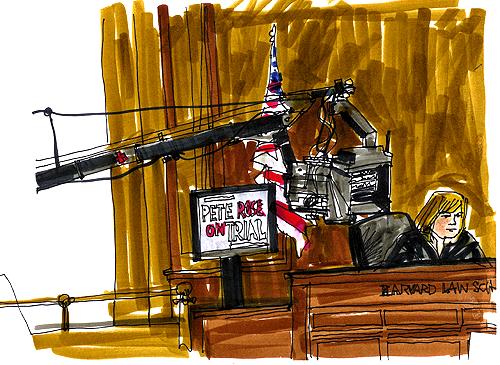


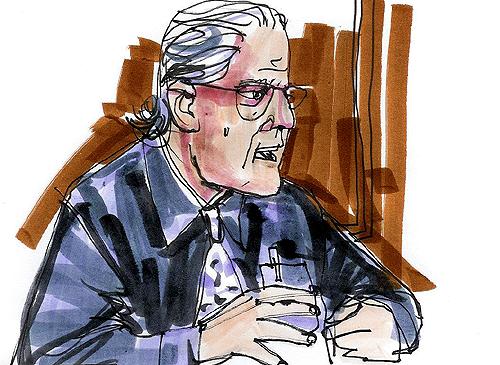
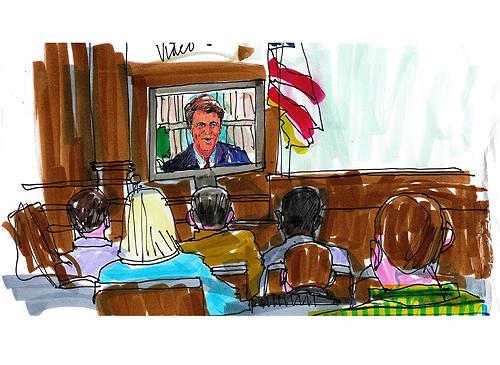
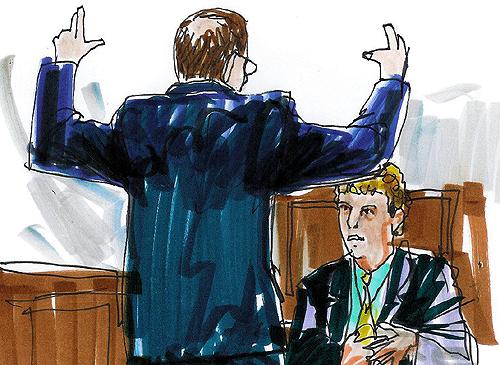
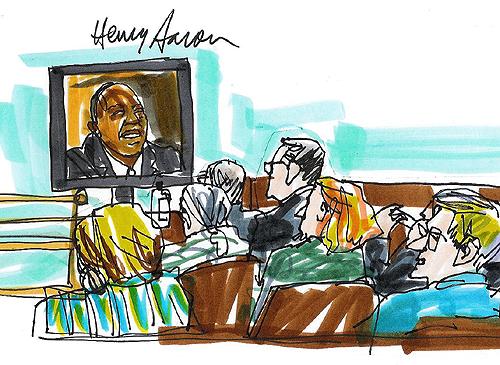
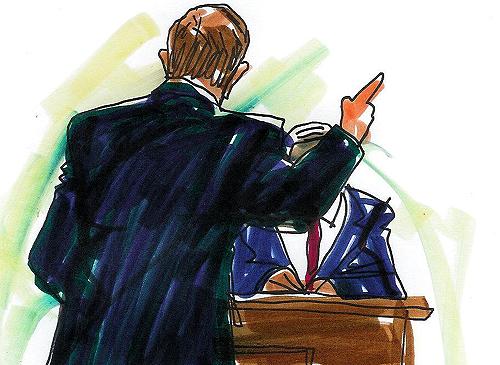

 [Mike: A "ching", or perhaps "I Ching", in Pujols' armor? What, is Joe a Taoist? I though he was a Doh!-ist (yuck yuck).
 [Mike: My favorite is doing a backflip onto the field, getting kissed by Morganna, getting run over by the tarp machine, and then going back to the room and killing the family cat. Now that's a COMPLETE game.

 [Mike: Yeah, and they traded problems, too. Though I'm not sure if the Russian judge would accept the spelling of Kazuhiro.]
 [Mike: The operative phrase is "if marketed correctly". It doesn't matter how many fans there are of the teams in the Series, even if it's the lovable losers who are meeting. What matters is that baseball make fandom care about the Series. Yet far they have proven incapable of this, unless you think contraction-gate was a feel-good event.
 [Mike: Hey, Moderator, if that is your real name, what have you done with Joe?]
 [Mike: For the record, Joe was "technically" traded twice:
  [Mike: How do they fix the PR disaster? By fixing the roster disaster they have created over the years. They have no pitching and lost their superstar (again) to injuries. They are fifth in the worst division in the NL if not all of baseball. No matter what ownership told players and promulgated in a full-page ad in the Cincy papers, this year is over, Johnny, new stadium or no. It's time to build for next year.